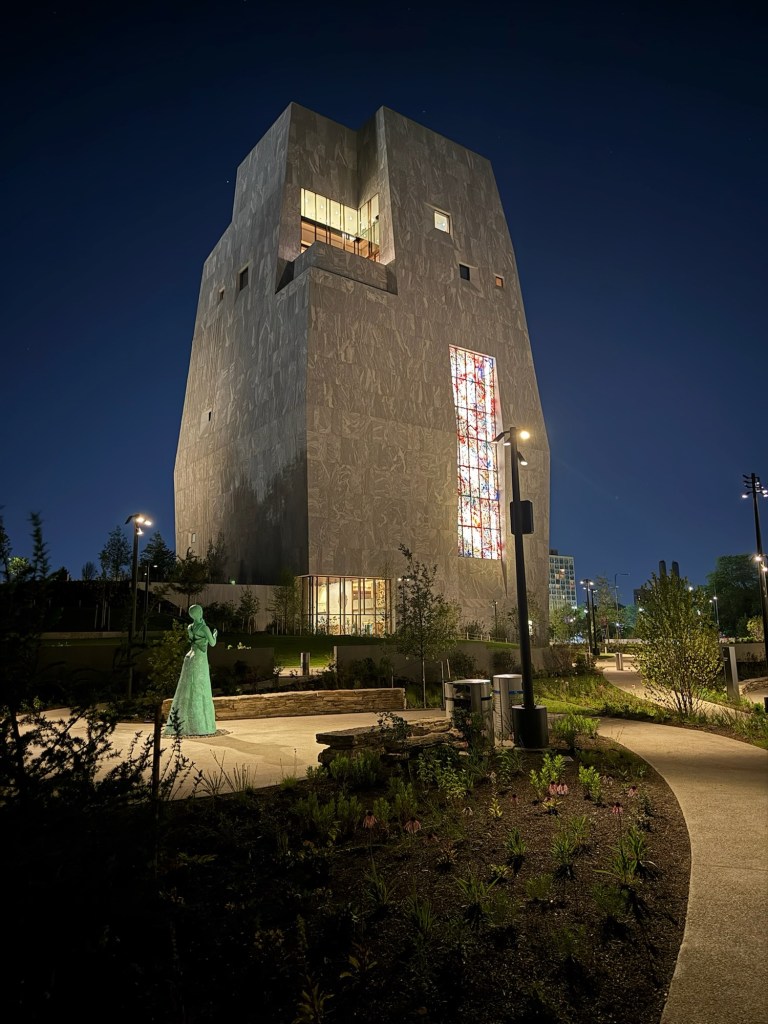
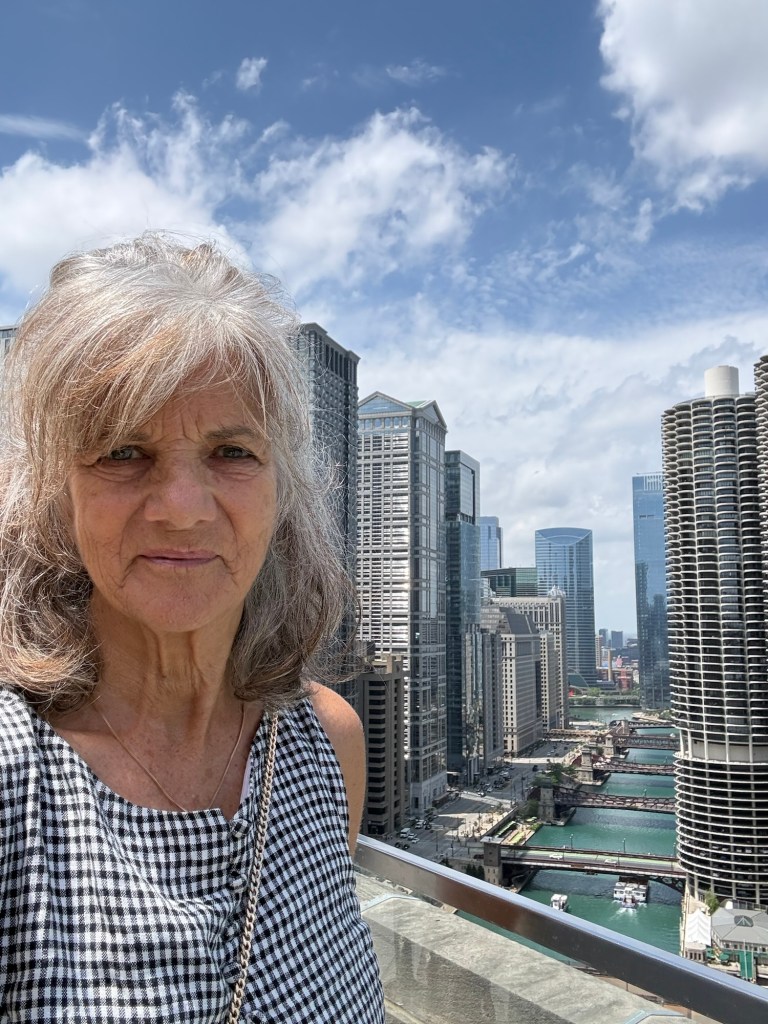
Obama Presidential Center & grounds, South side Chicago
In addition to the wedding festivities, my first stop was the Obama Presidential Center. Even without a ticket, there was still plenty to see. Every art installations, every design feature was approved by the Obamas. A sampling of donors included: Spielberg, Oprah, Tom Hanks, Bezos, Chesky, Gates, Paul Mc Cartney, Springsteen, Eddie Vedder.
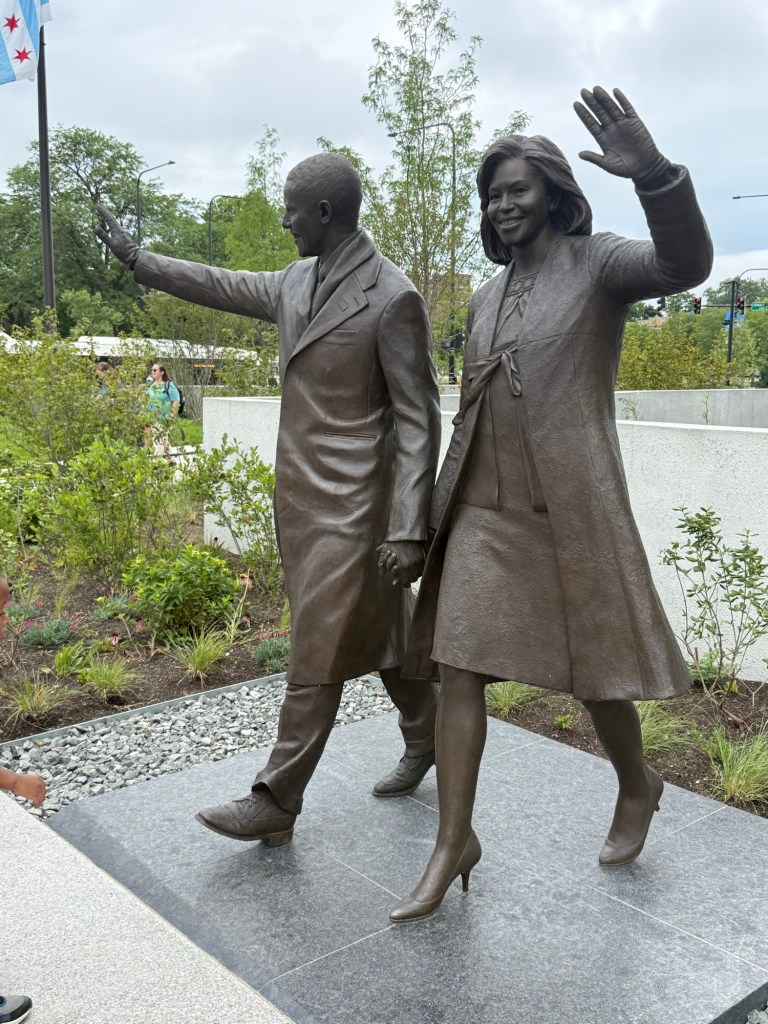
Approaching the plaza, there is a life sized bronze sculpture depicting Barack and Michelle Obama inauguration walk. There is a line of fans wanting to take a picture with them.
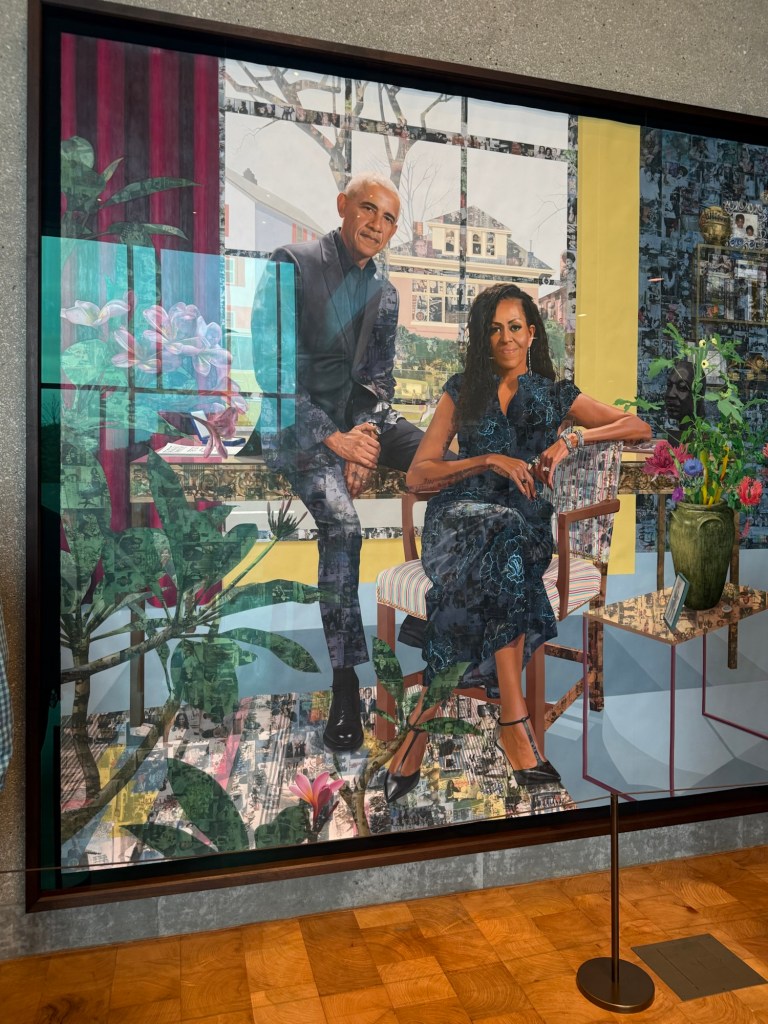
The lobby displayed art installations alongside an original life sized painting of Obamas life and public service together.
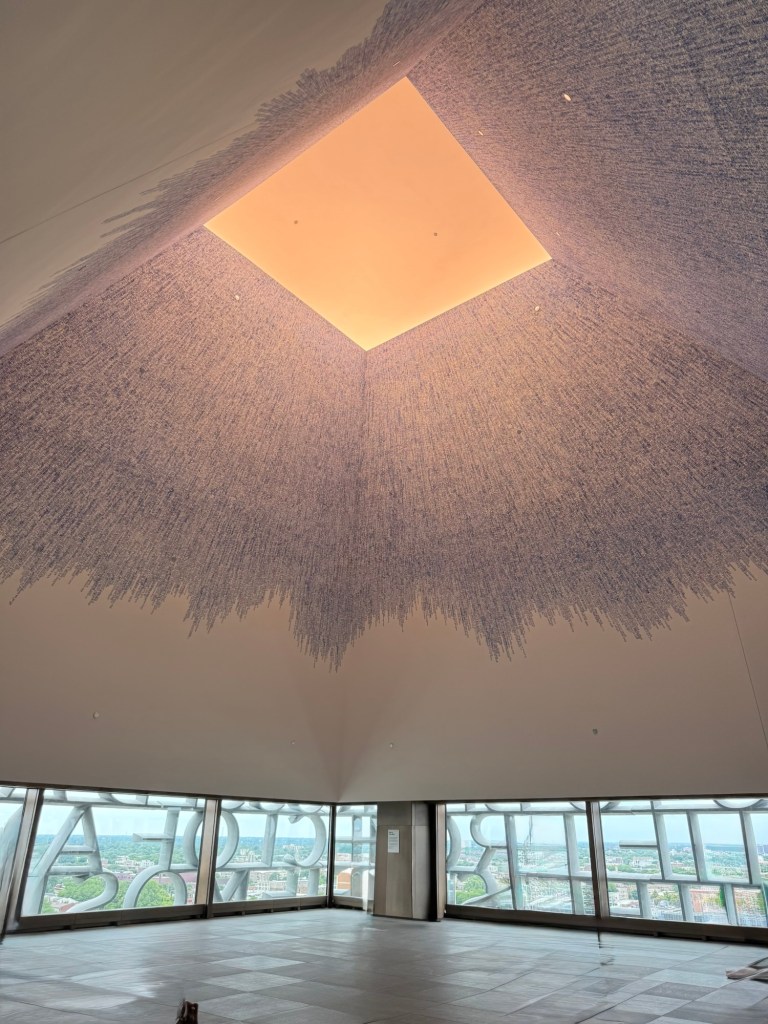
Art installation Sky room 4th floor
The Sky Room, dedicated to Nelson Mandela, offered sweeping views of Chicago’s South Side and the lakefront. Downstairs, the presidential library featured favorite books by Barack & Michelle Obama. There are 2 cafes one featuring their favorite foods. Outdoors in the plaza there is a community vegetable garden, massive playground and The Court aka basketball courts for youth.
Join the Obama Foundation and you can get a ticket easier than on line. Ticket in hand, you visit the museum, a fashion exhibit from Michelle, replica of the oval office and a chronology of accomplishments during Obama’s presidency.
Yesterday left Chicago 1 day early from Union Station as the heat wave expected to reach high 90s. Arrival to Emeryville is already late by 1.5 hours, typical of American railroad but I don’t care cause I’m enjoying the ride so far.
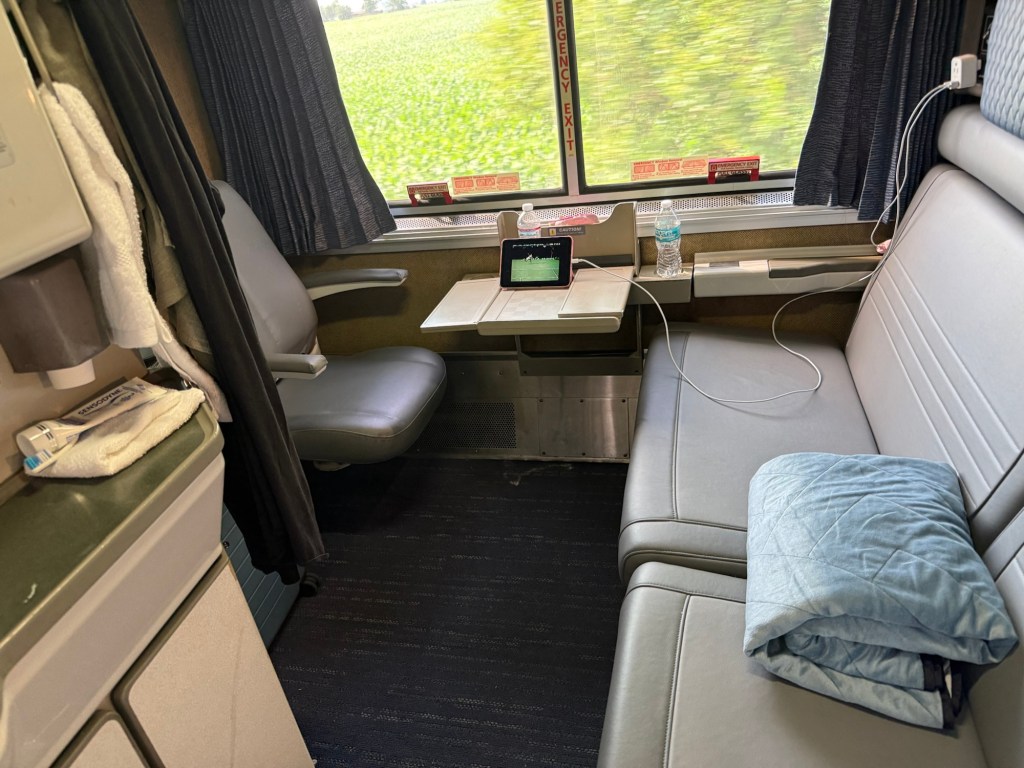
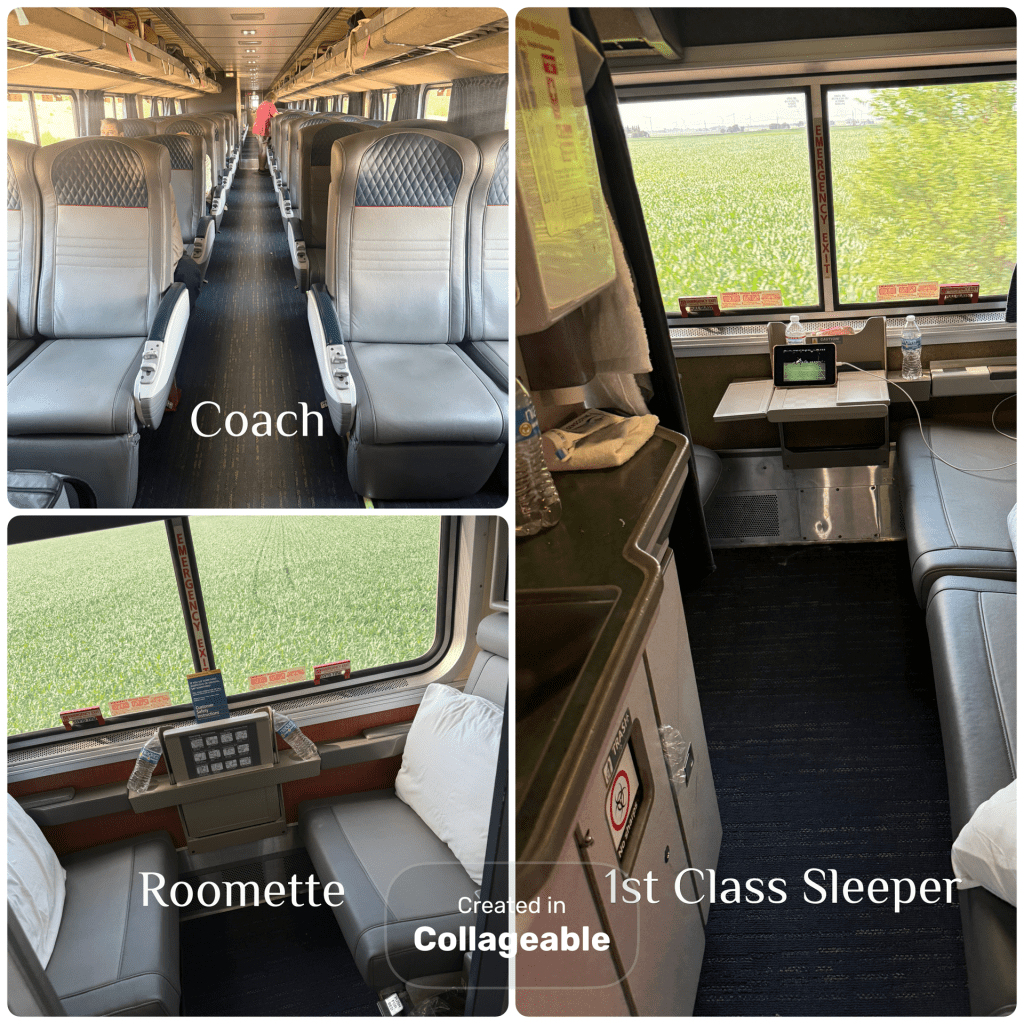
Sleeper with bathroom
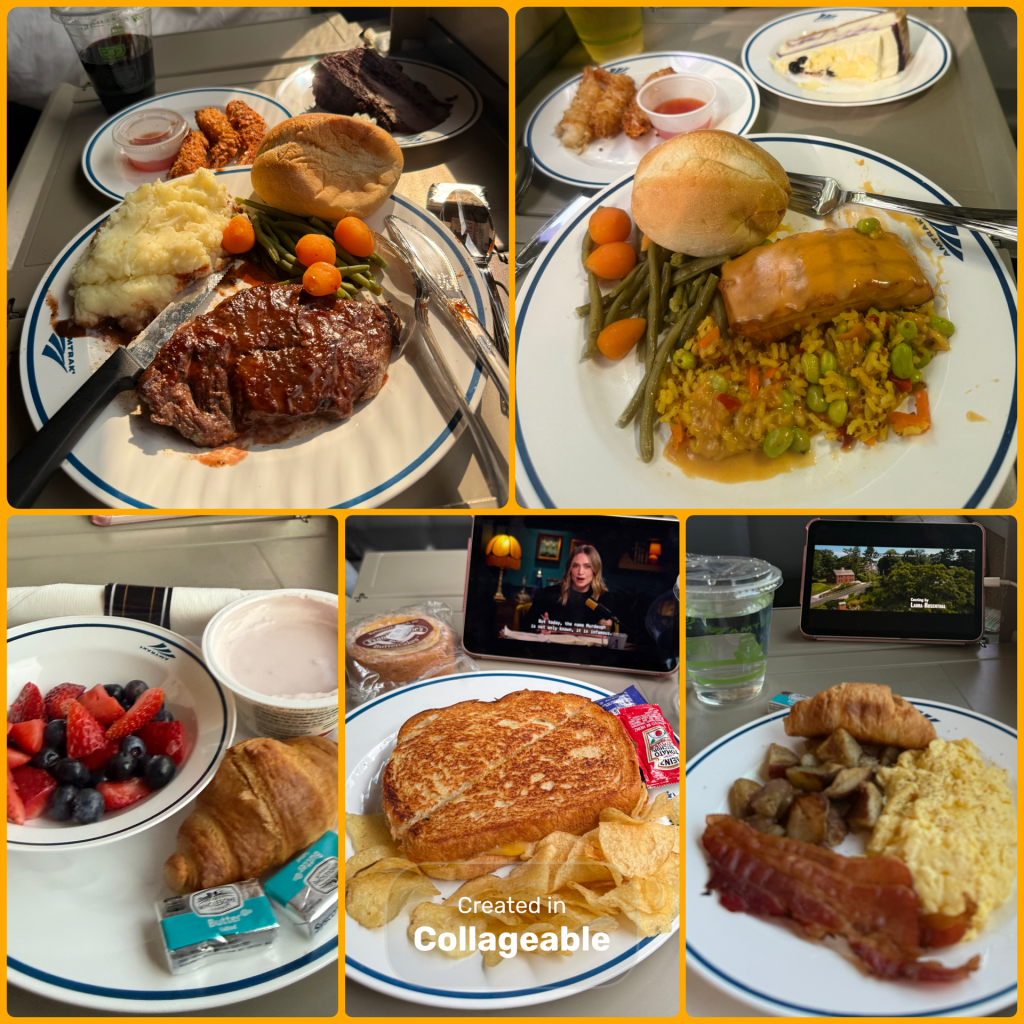
My 1st class sleeper has ample space, the crew are friendly, delicious & varied meals and I’m reminded of exotic lands when I hear the train horn. I’m lulled to sleep with the back & forth motion.
Illinois and Iowa grow acres of corn, known as the Corn belt of US. AI says Corn popular because of the years of prairie land resulting in fertile soil, flat terrain making it easy to plow by horses later tractors, plenty of rain, easy access to the Mississippi & Illinois rivers and not only sold as grain but also feed pigs & cattle. Houses or farms, even campers are miles away from each other. I’m happy to see solar panels dotted throughout the area.
Deteriorated old brick grain warehouses, depots, and factories along the tracks are reminders of a bygone era when grains were transported by railroad.
In Illinois passed many towns that were part of the Underground Railroad which not an actual railroad but used railroad language as code. Blacks like Harriet Tubman helped enslaved African Americans escape from slave states in the South to free states in the North. Illinois was a free state but they were not friendly to Blacks. Today, many homes, churches, and barns in the Midwest are remembered as part of this path to freedom.
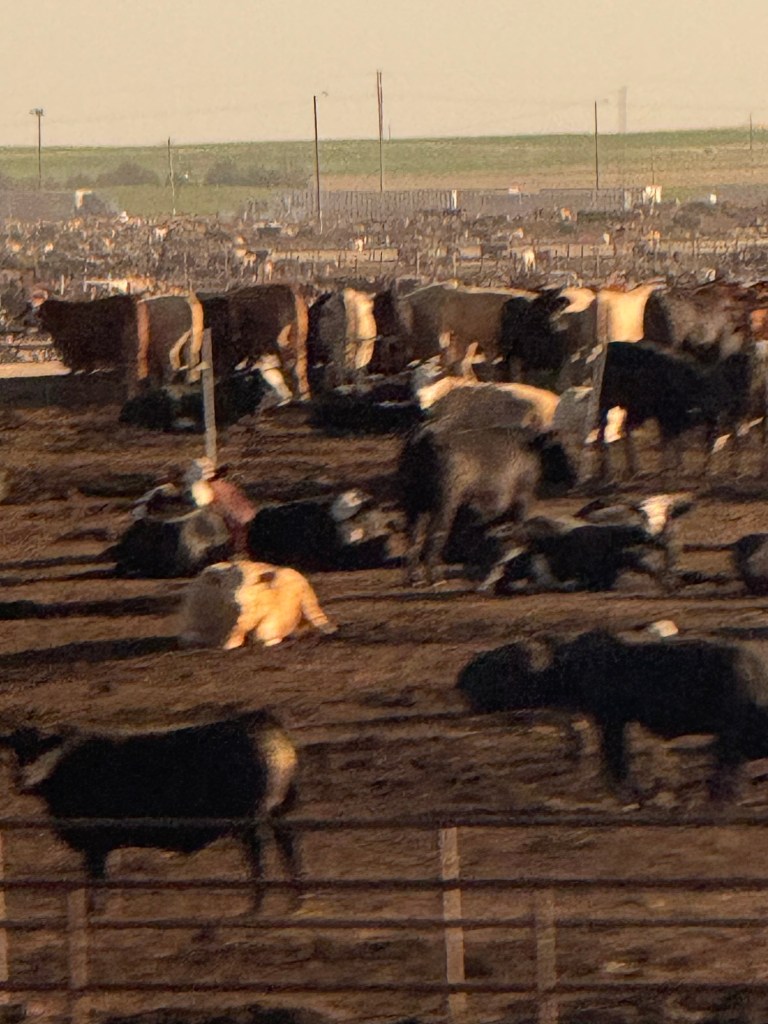
Cattle packed in
Comfortably slept through Nebraska—miles of prairie, endless silos with wheat, and cattle packed into feedlots as far as the eye could see. Ride the train through America’s heartland long enough, and vegetarianism starts to sound like a solid plan.
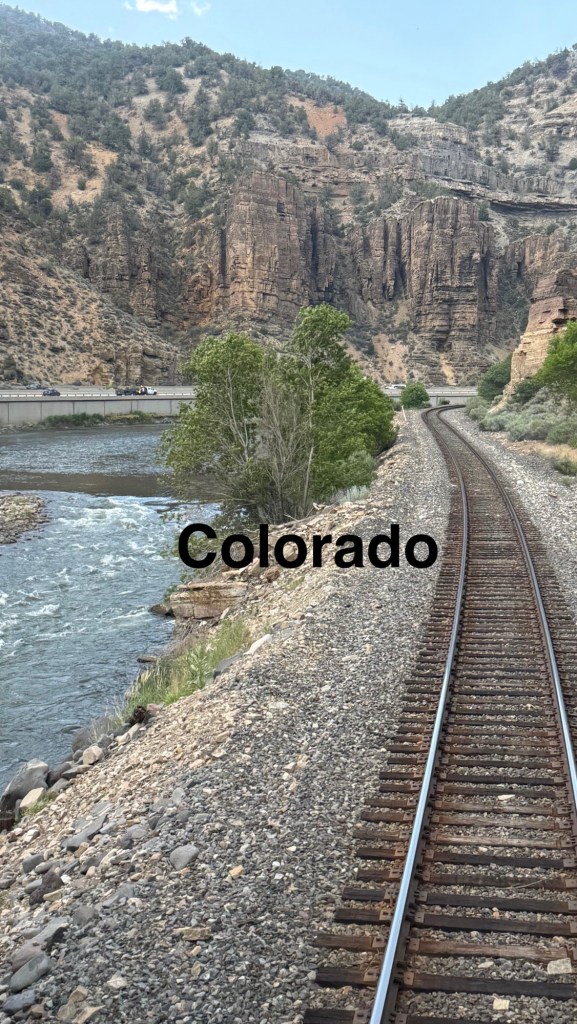
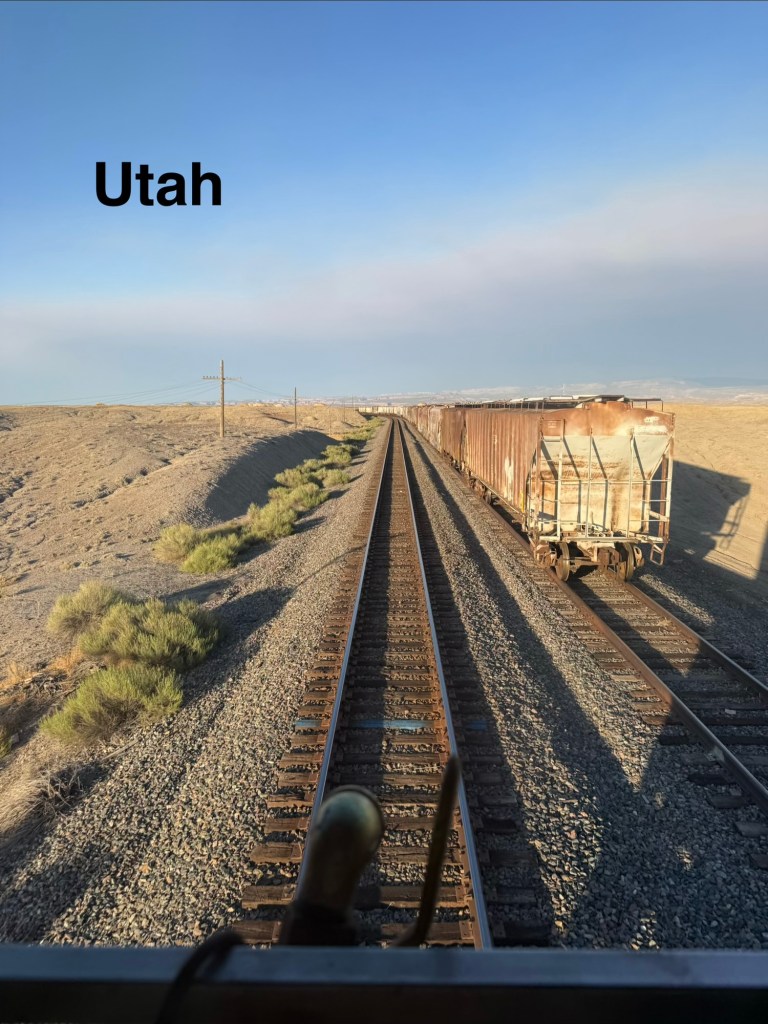
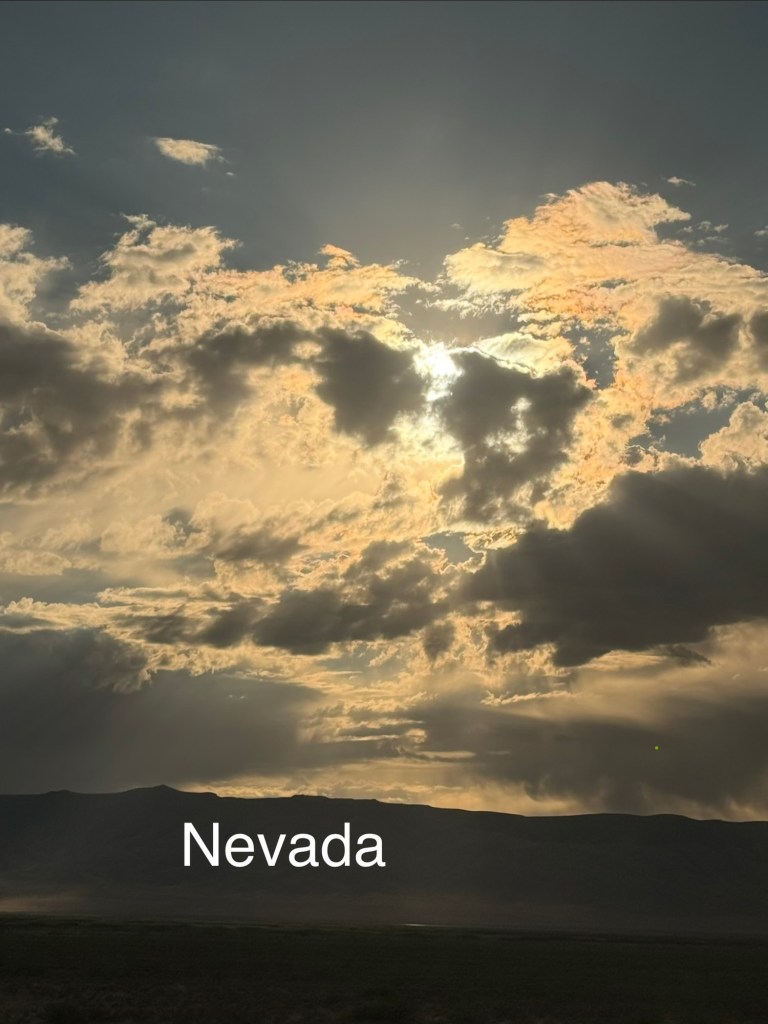
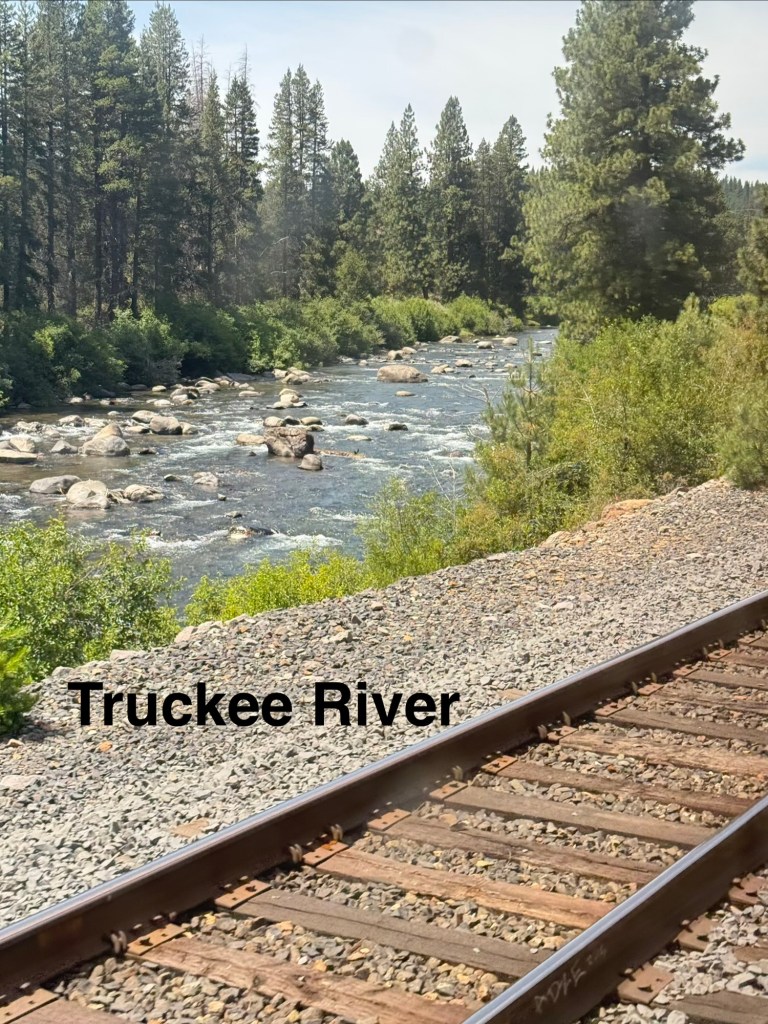
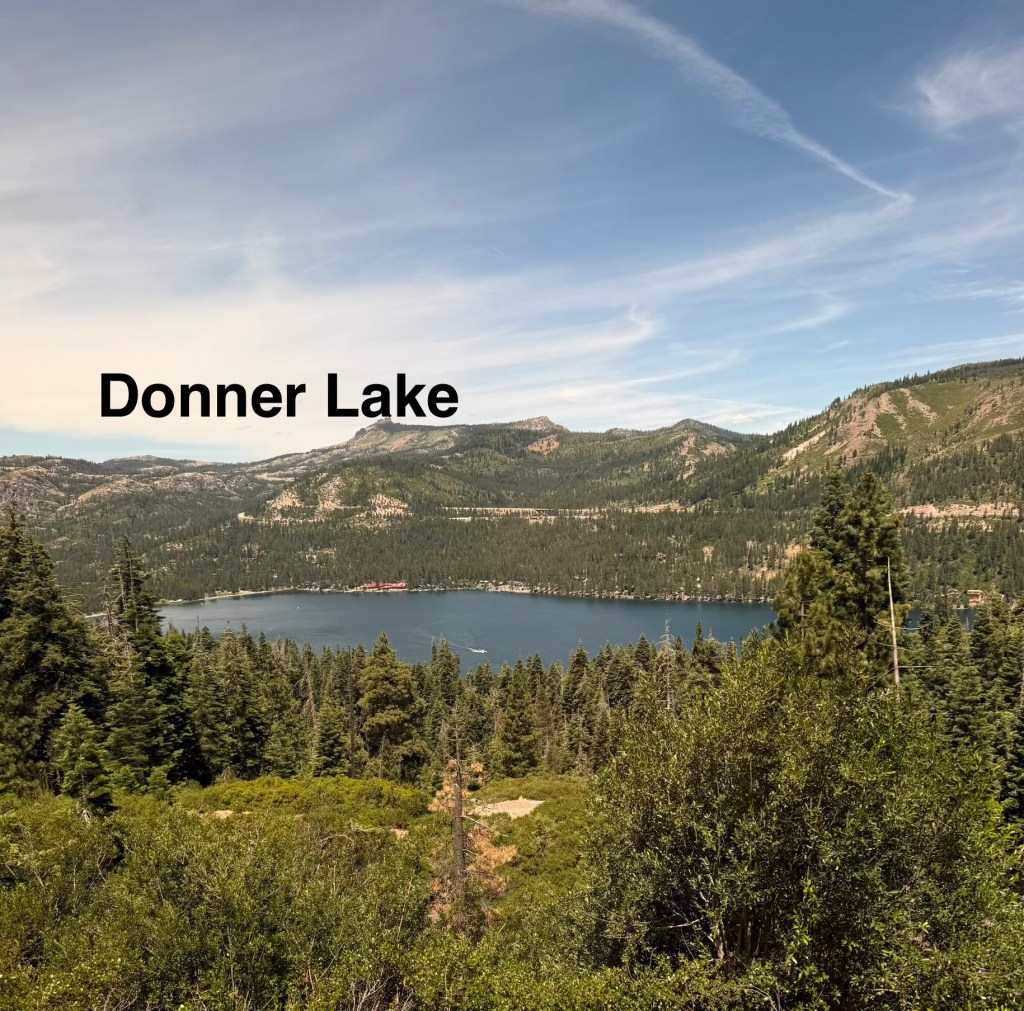
Today, looking forward to the Zephyr’s most breathtaking stretch, winding through the Colorado River then Utah, Nevada, California.
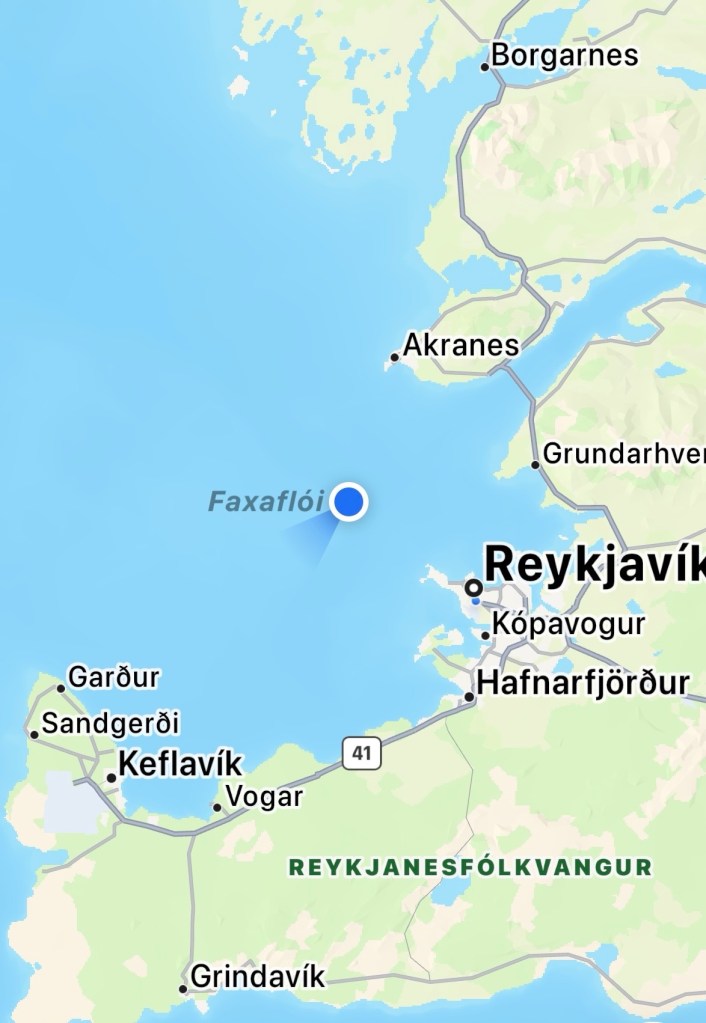
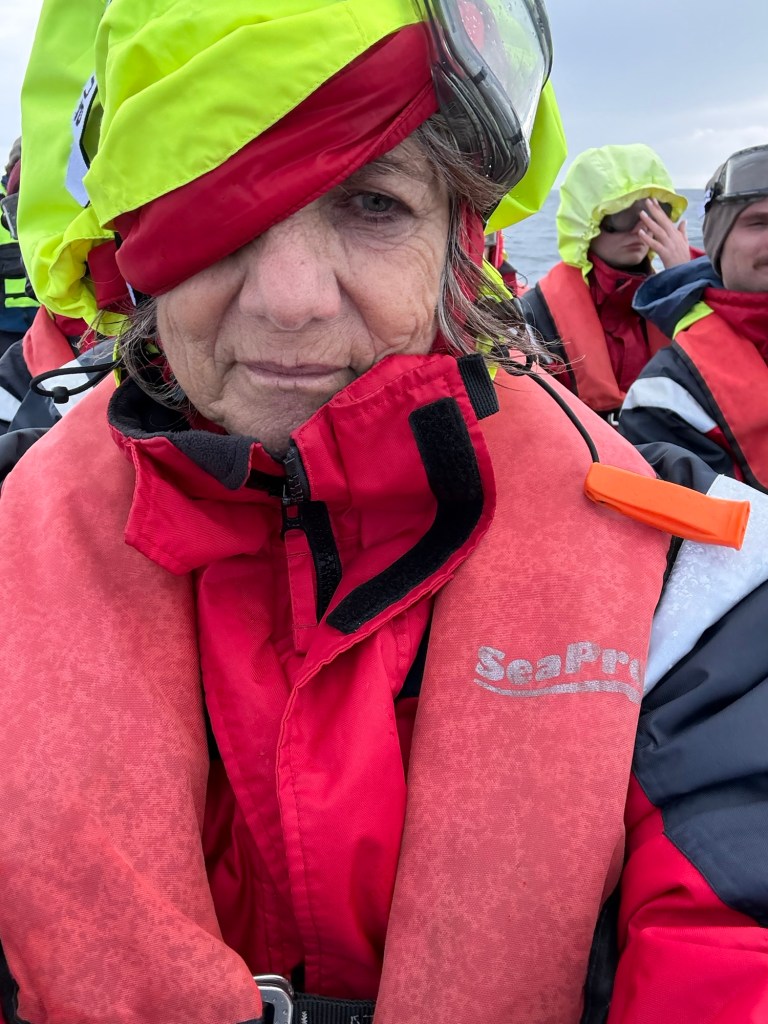
Splurging on a $200 Zodiac whale-watching tour in the bay off Reykjavik was worth every penny. We spotted whales, dolphins, and puffins furiously flying over the ocean but the highlight was an extraordinary sight: a whale feeding just below the surface, a moment that will stay with me long after the trip.
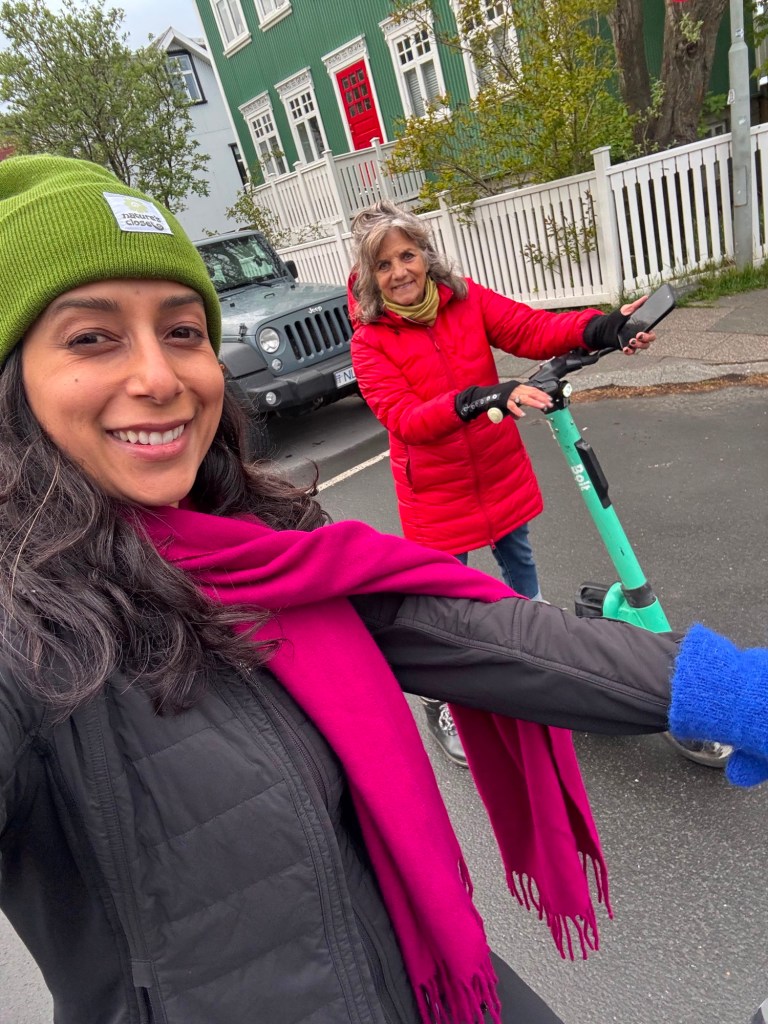
Renting scooters left all over Iceland. Just download the app & your off!
On our final day, we rented electric scooters and zipped across the city, stopping at a secondhand store and an ice cream shop beloved by the locals.
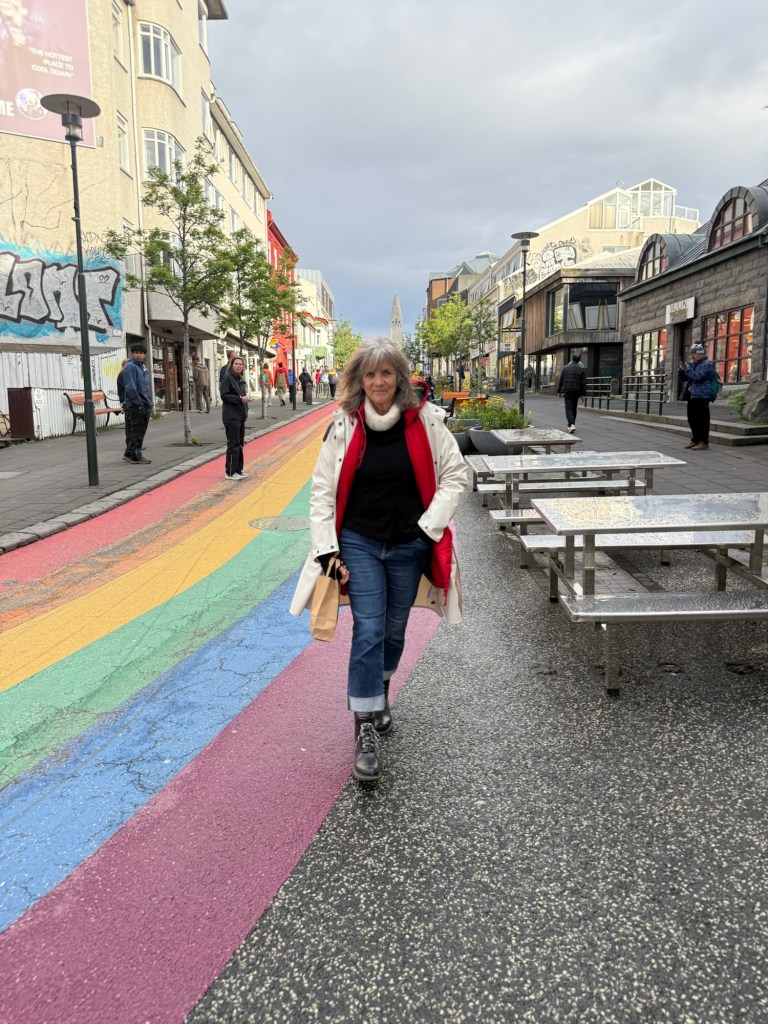
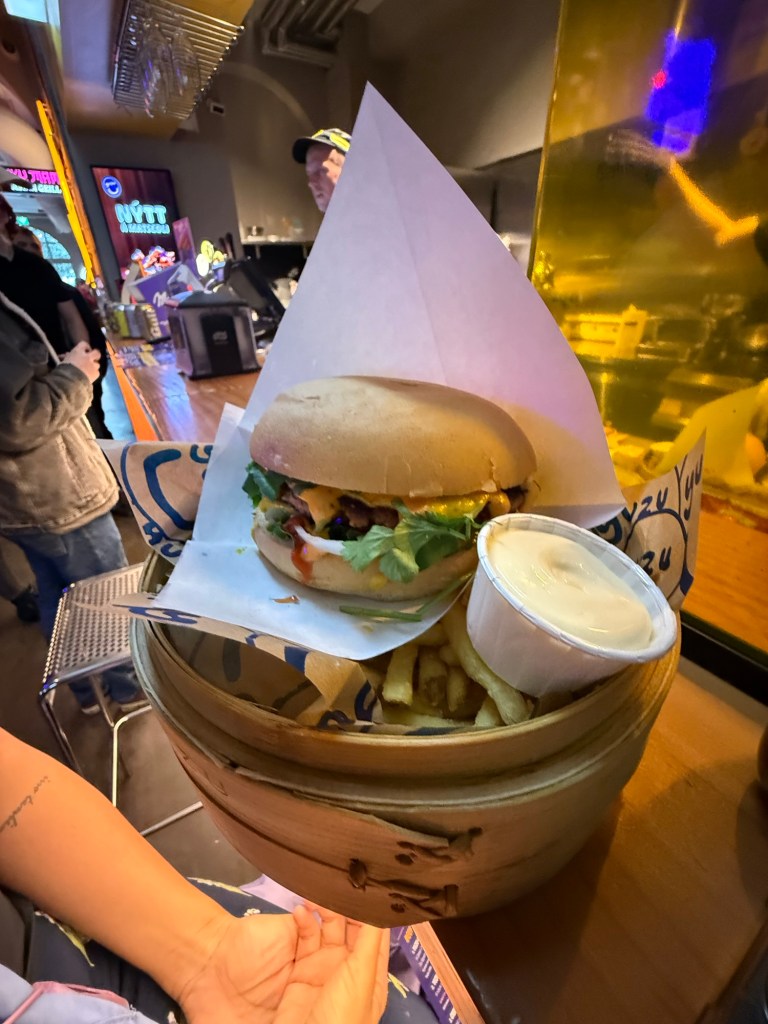
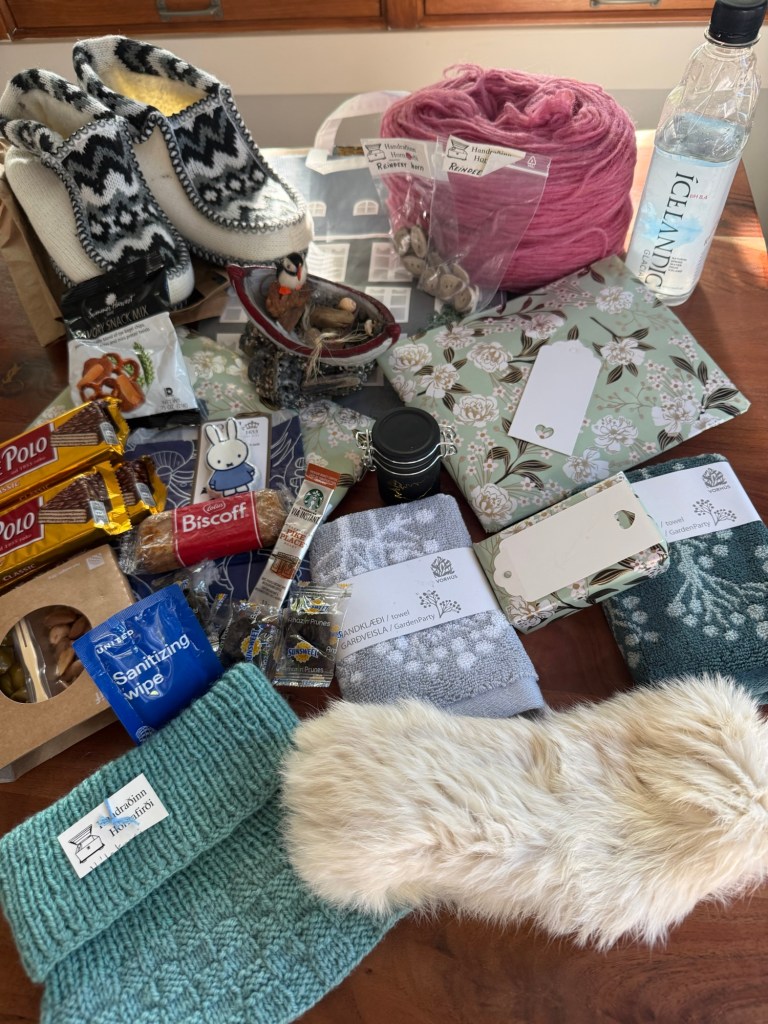
Back in the city center, we treated ourselves to vegan hamburgers and fries at the food hall before setting out on one last stroll up the Rainbow Road. We lingered in front of favorite storefronts, made a final visit to the Sands Hotel, and purchased Icelandic wool for future knitting projects and gift.
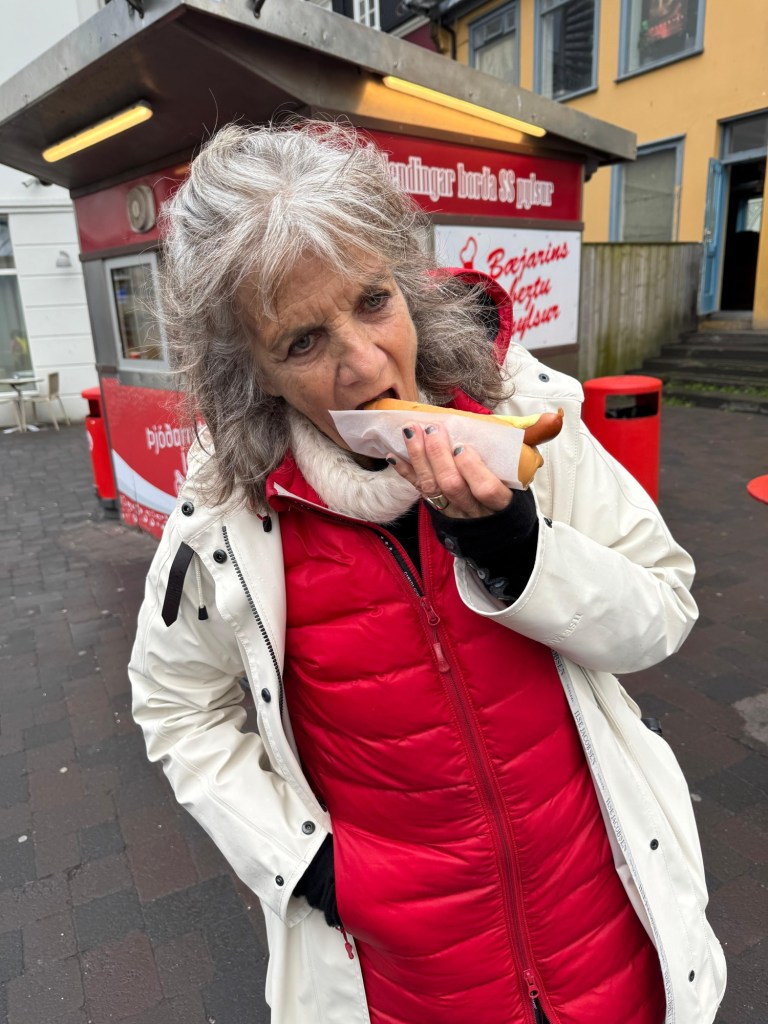
Best hot dog ever: special sauces, crunchy onion hidden between dog and bun
Of course, no visit to Iceland would be complete without devouring the famous hot dog that Anthony Bourdain helped make legendary among Icelandic travelers.
Wildlife
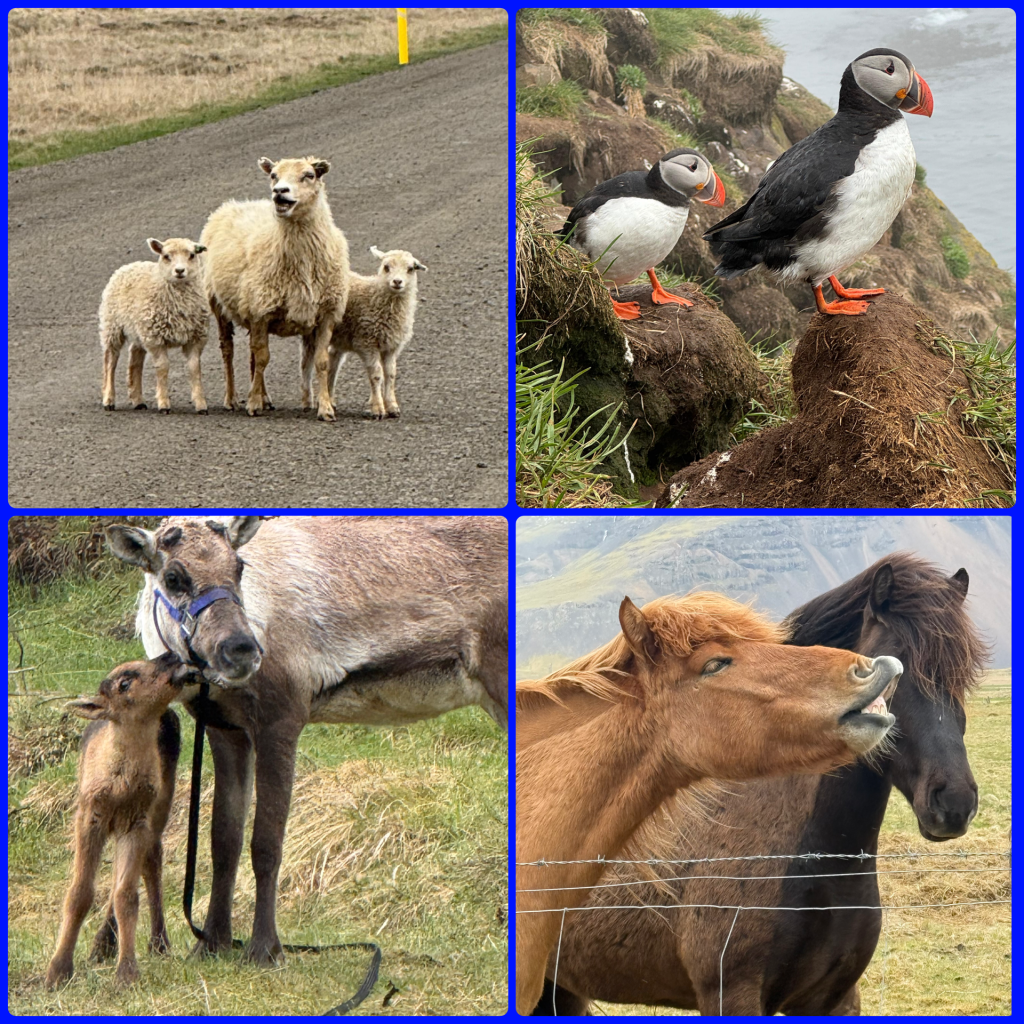
Overall, I loved the adventures, excursions, and abundant wildlife that made Iceland such a memorable destination. The whale watching, puffin colony, reindeer farm, feeding carrots to horses & baby lambs on side of road & dramatic landscapes were the highlights of the trip. On the other hand, I found many of the towns, hotels, and the often cold, drizzly weather rather dismal. While the people were friendly enough, few seemed to linger outdoors, and I often found myself strolling through the towns alone in the mist and rain.
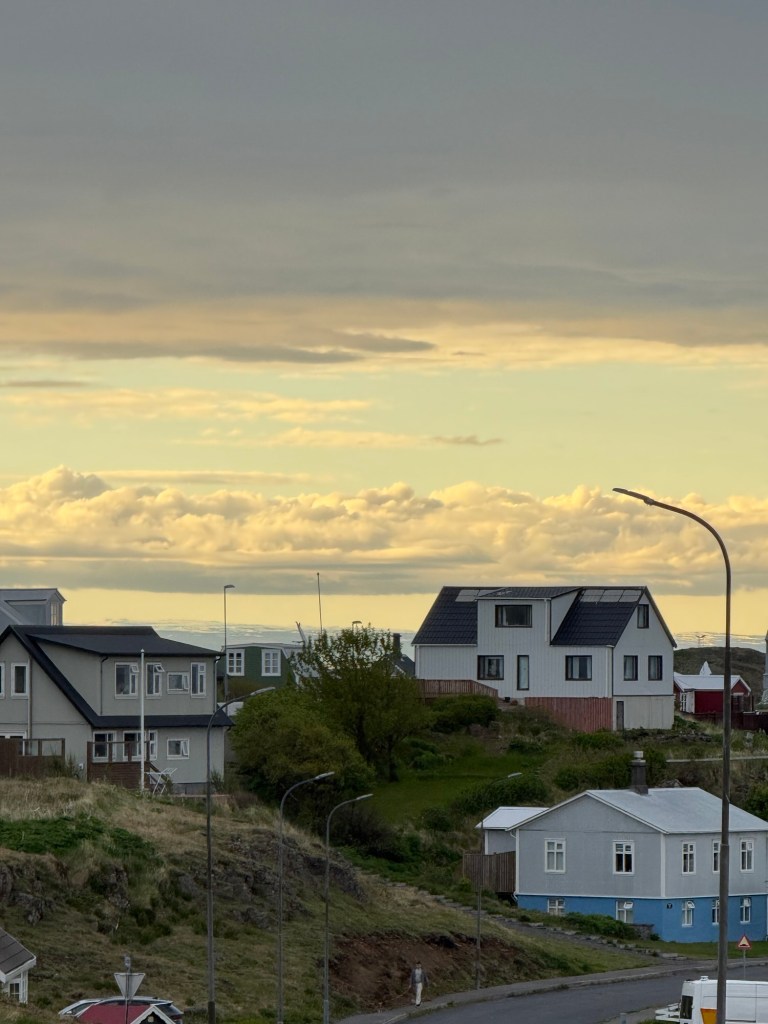
Stykkishólmur on Iceland’s Snæfellsnes Peninsula,
Of course, others in our group felt quite differently. They relished the quiet, isolated villages, the unhurried pace of life, and the charm of the quaint hotels. What felt lonely to me felt peaceful and restorative to them. Travel is like that—each person experiences the same place through a different lens. For me, Iceland’s greatest treasures were its wild beauty, remarkable wildlife, and unforgettable adventures rather than its towns and city life.
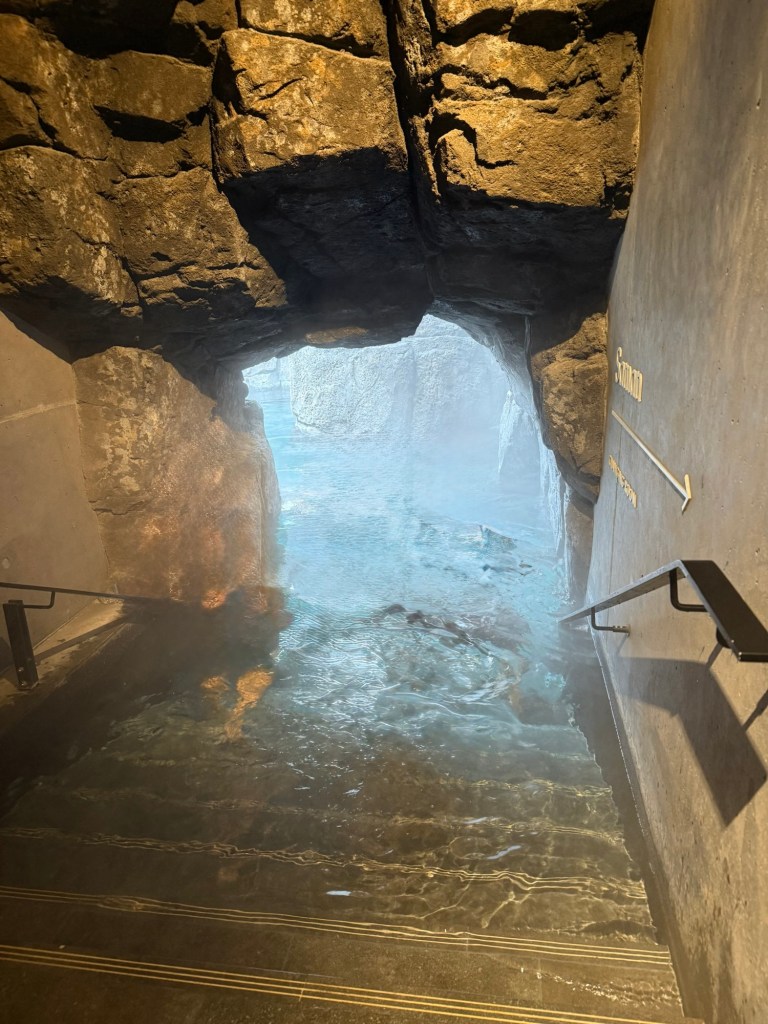
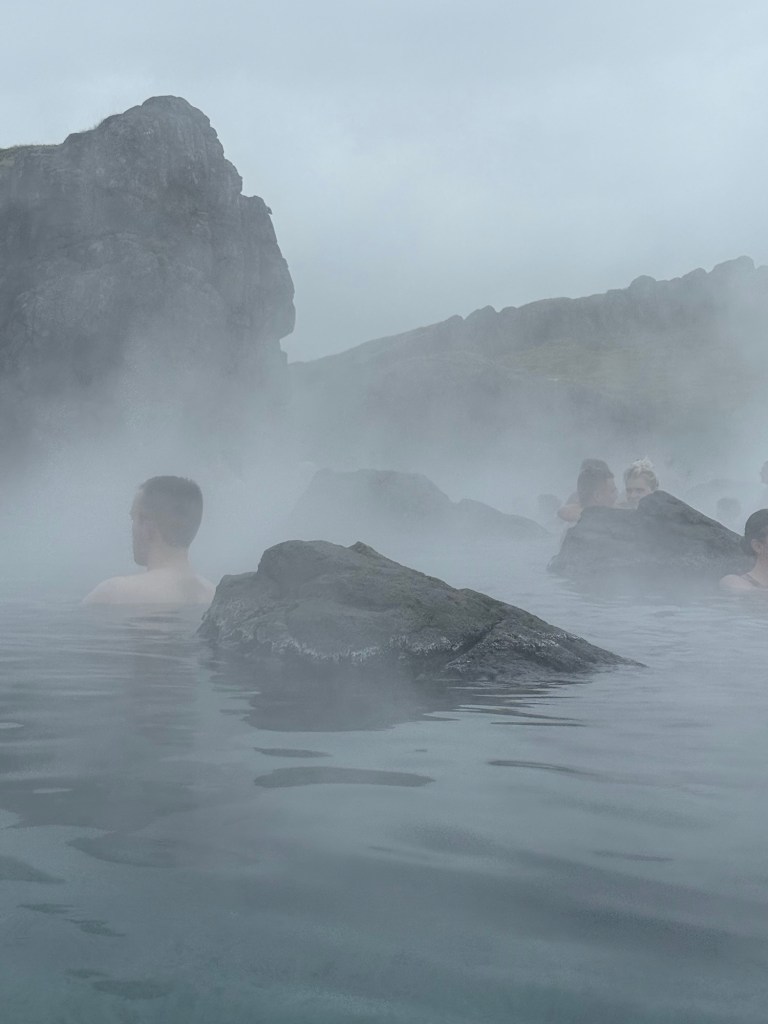
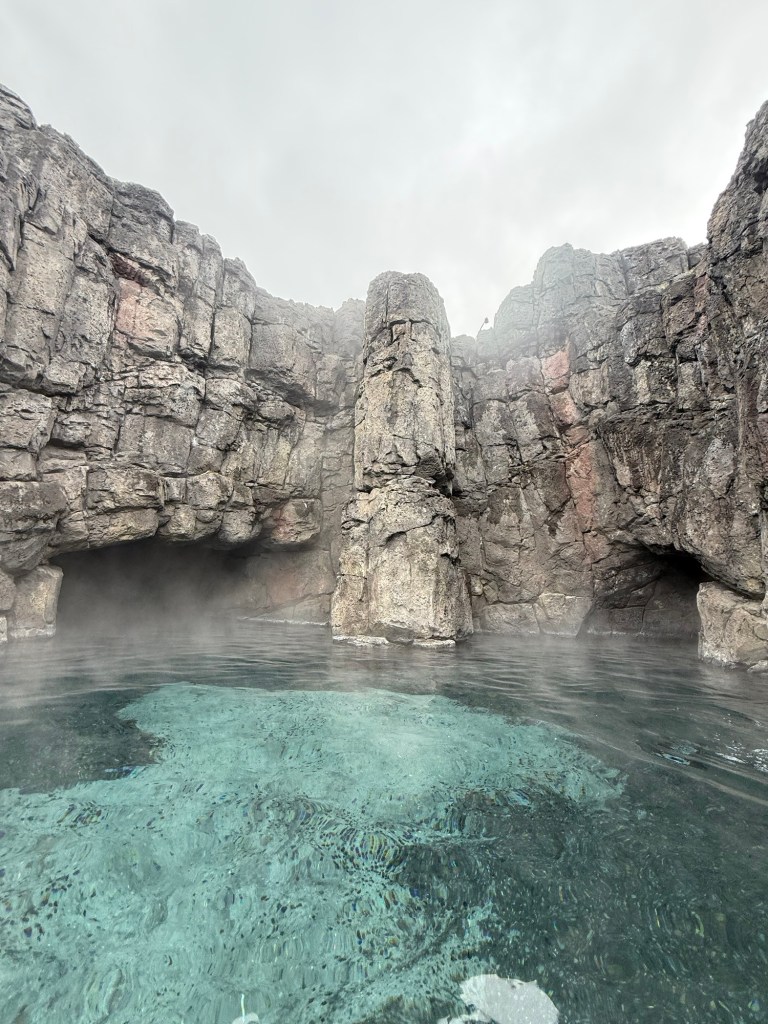
A short drive to Sky Lagoon is well worth the trip. Popular and often busy, it is also stunningly beautiful and exceptionally well organized. Staff carefully monitor the thermal baths, creating a safe and relaxing atmosphere. The experience follows a six-step ritual: a tranquil sauna with sweeping fjord views, a refreshing cool mist, an invigorating body scrub, a steam room nestled within volcanic stone walls, and, finally, a refreshing taste of Icelandic gooseberry juice. The combination of natural beauty, thoughtful design, and soothing treatments makes Sky Lagoon a memorable Icelandic spa experience.
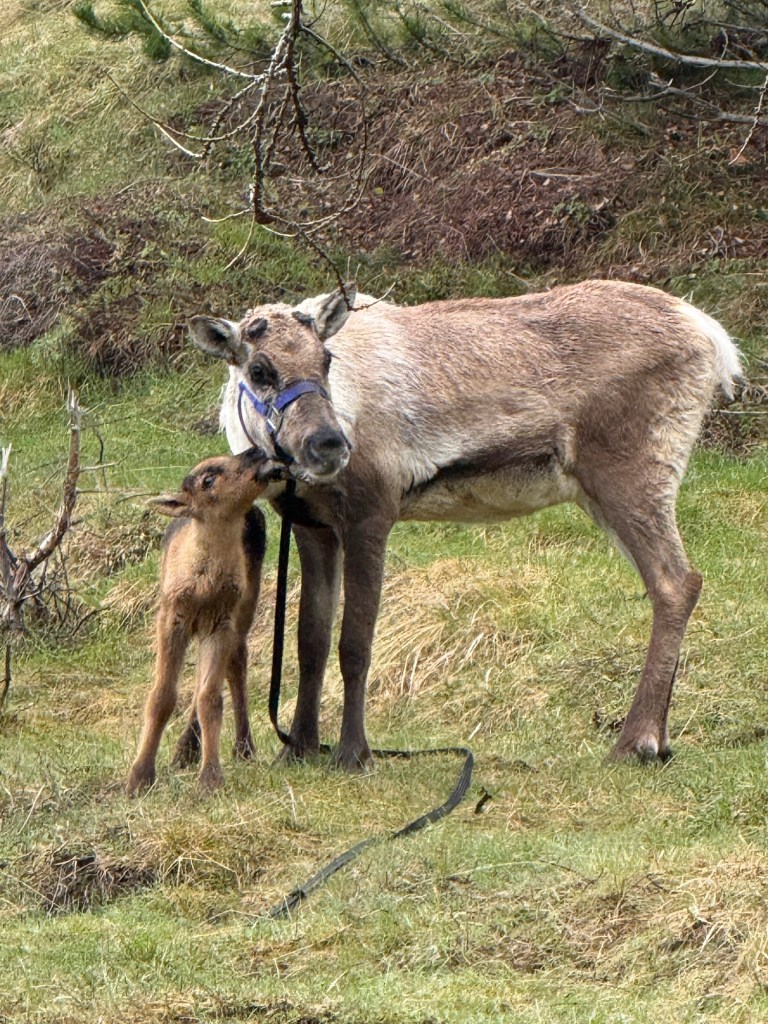
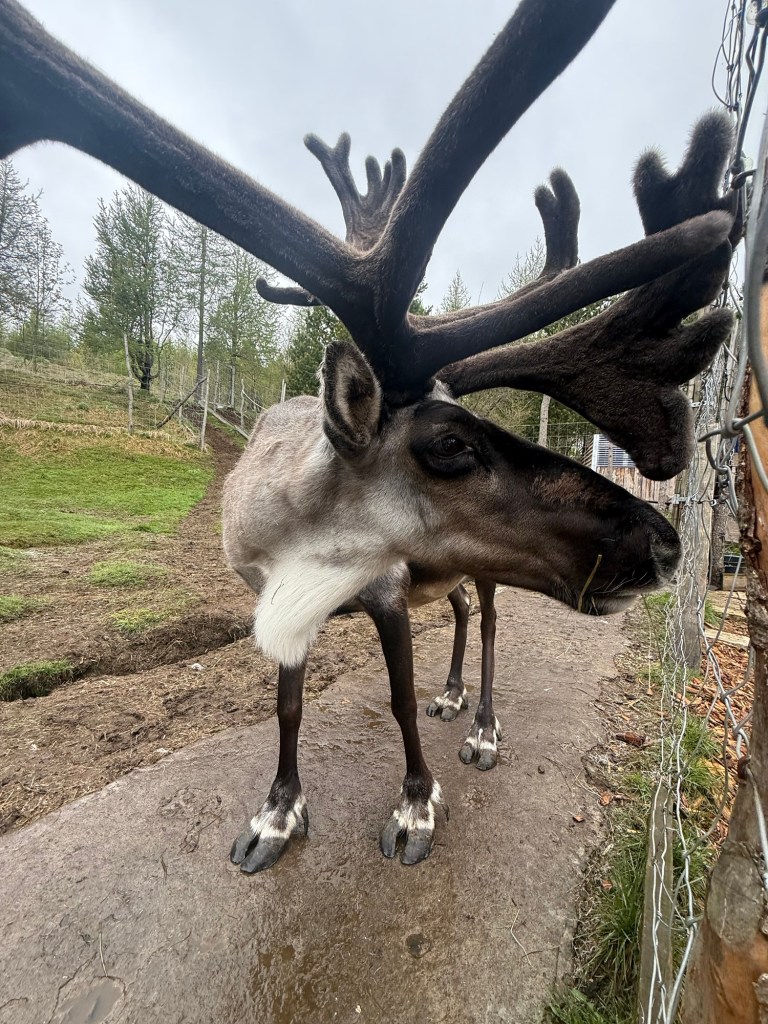
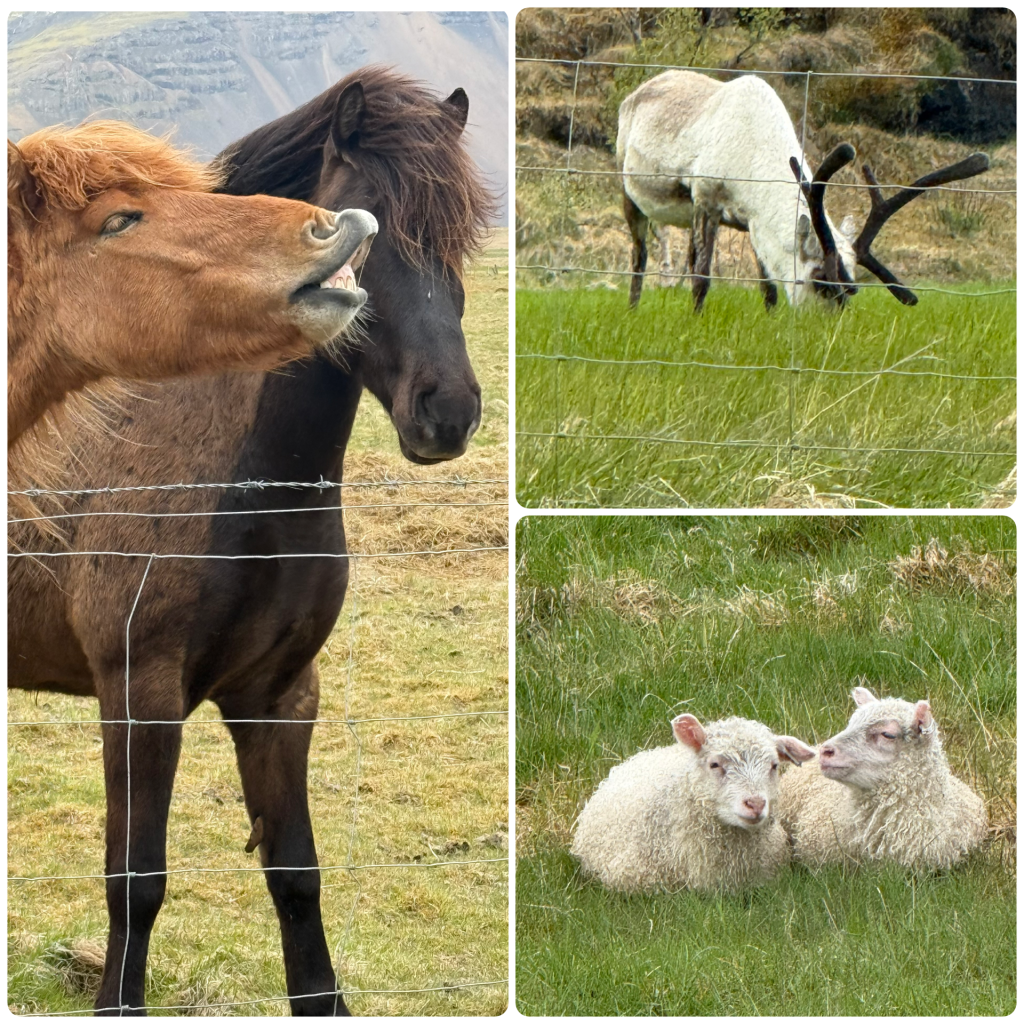
We visited a reindeer farm where orphaned and young reindeer calves were being raised. Reindeer are highly social animals and prefer the company of a herd. Some wander among cattle or join flocks of sheep for companionship, much to the farmers’ frustration, who often have to shoo them away. They are social but not affectionate as their fur is so delicate it falls off upon touch.
Unlike in many northern regions, reindeer serve little practical purpose in Iceland today. With no natural predators on the island, their population is managed through a regulated hunting season held at specific times of the year. Despite this, they remain an iconic part of Iceland’s landscape and culture.
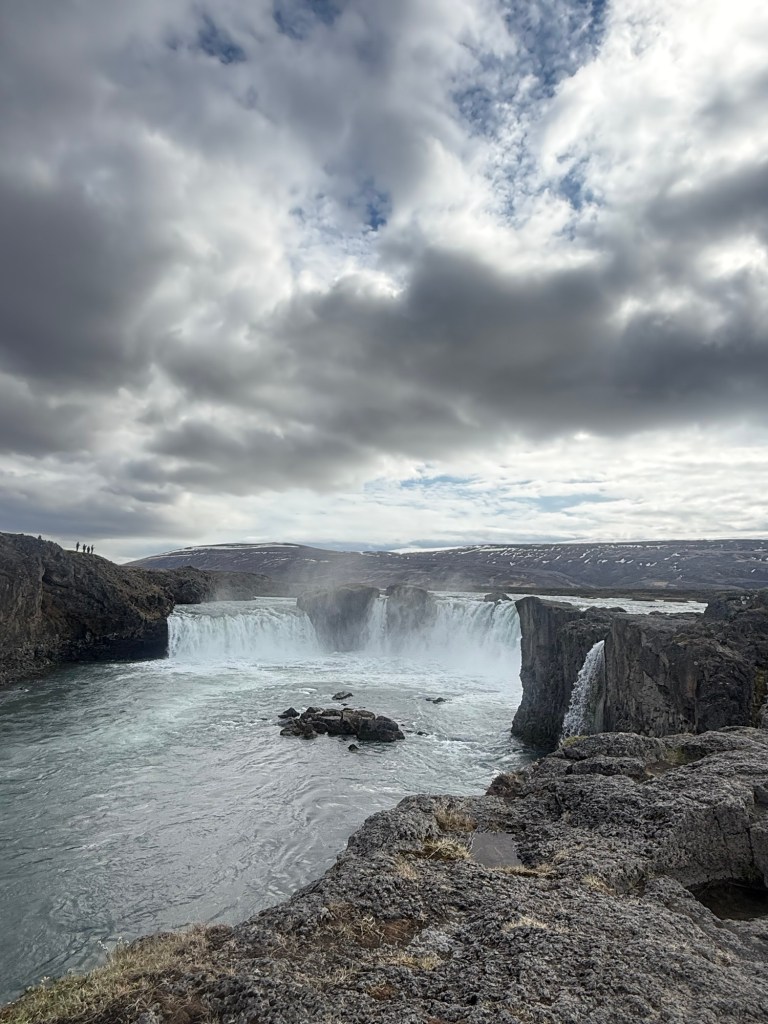
Godafoss waterfall
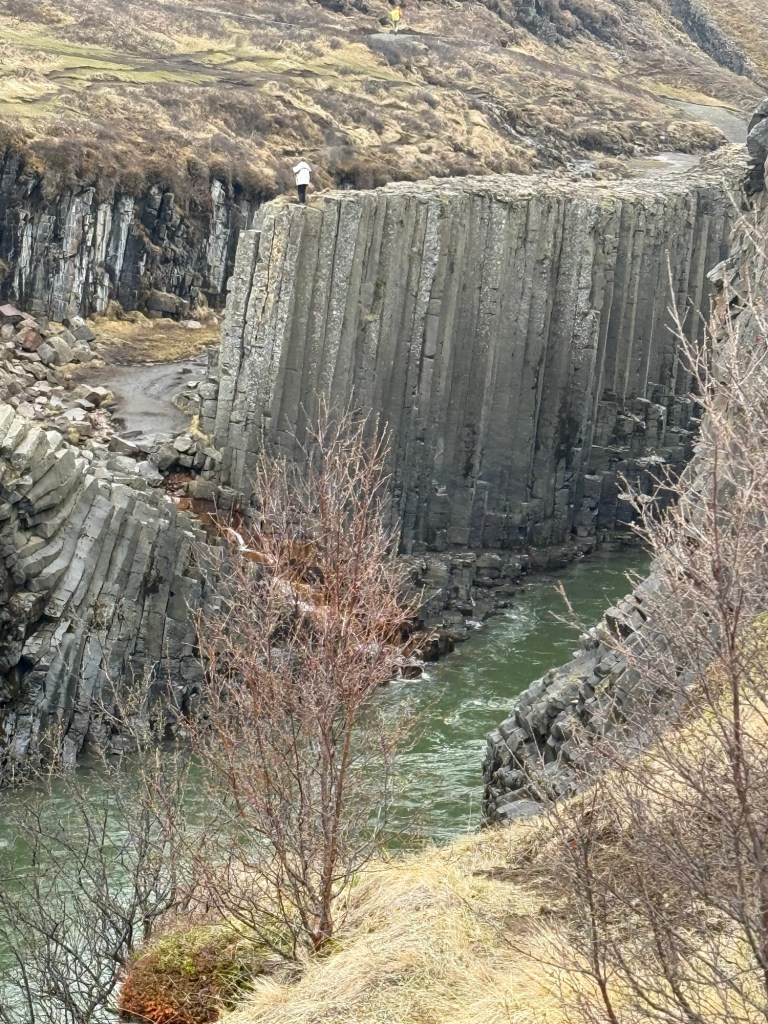
Before arriving in Icelands northern capital, we stopped at Stuolagil Canyon and Godafoss waterfall.
Stuolagil canyonAkureyi
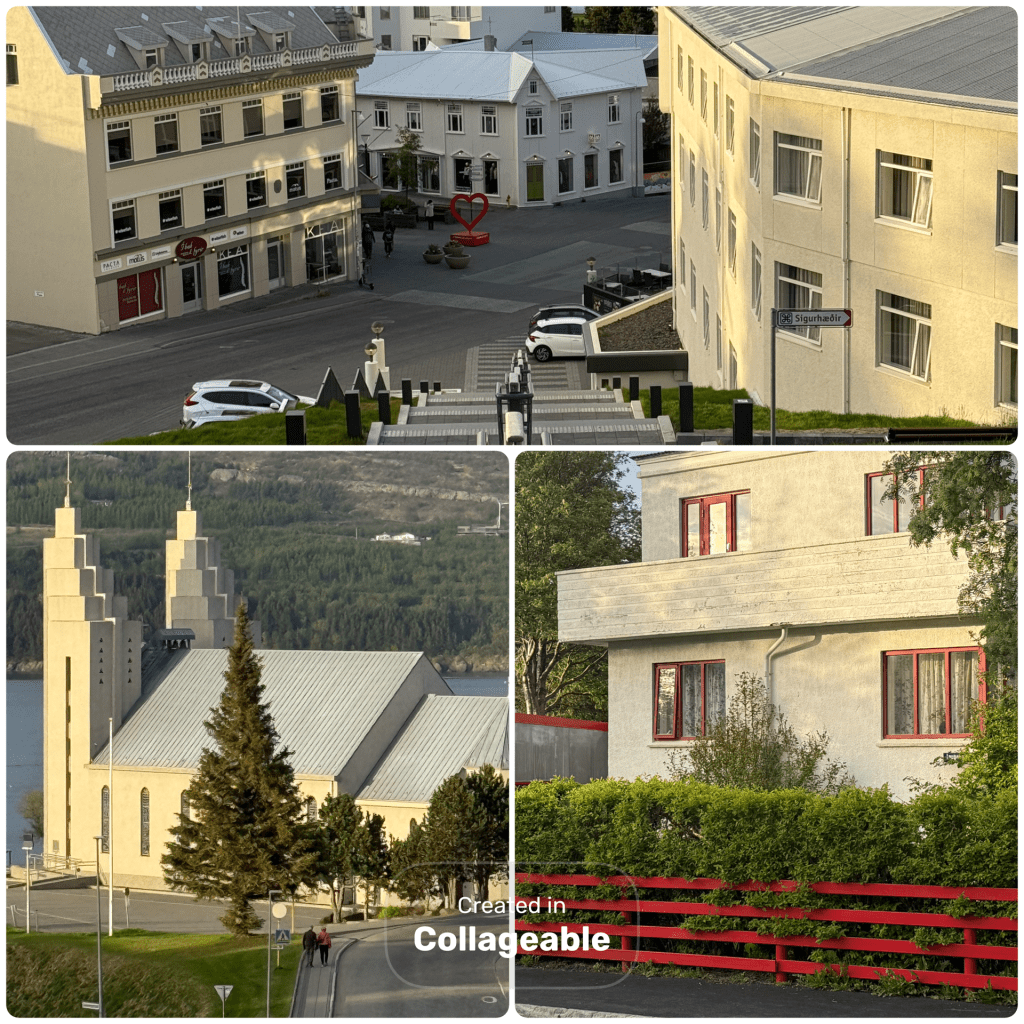
The northern capital of Iceland was a surprisingly vibrant town, complete with a university, inviting playgrounds, and a beautiful botanical garden. The compact downtown area was filled with charming shops, colorful buildings, and cafés that made wandering its streets a pleasure. Along the harbor, whale-watching boats departed throughout the day, offering visitors the chance to see whales in the waters of the fjord. Despite its remote location, the town felt lively, welcoming, and full of character.
After driving 4 hours along Iceland’s Route 1, hugging the coastline and winding past fjords, we arrived at a historic farmhouse—only to set off again in search of a puffin colony.
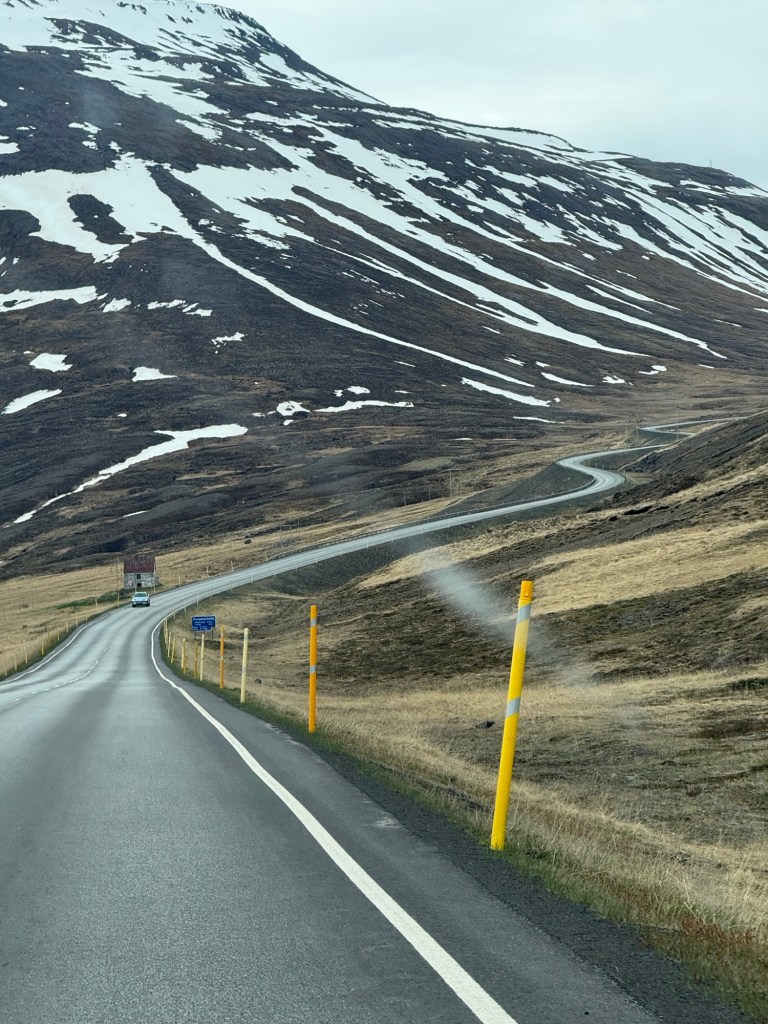
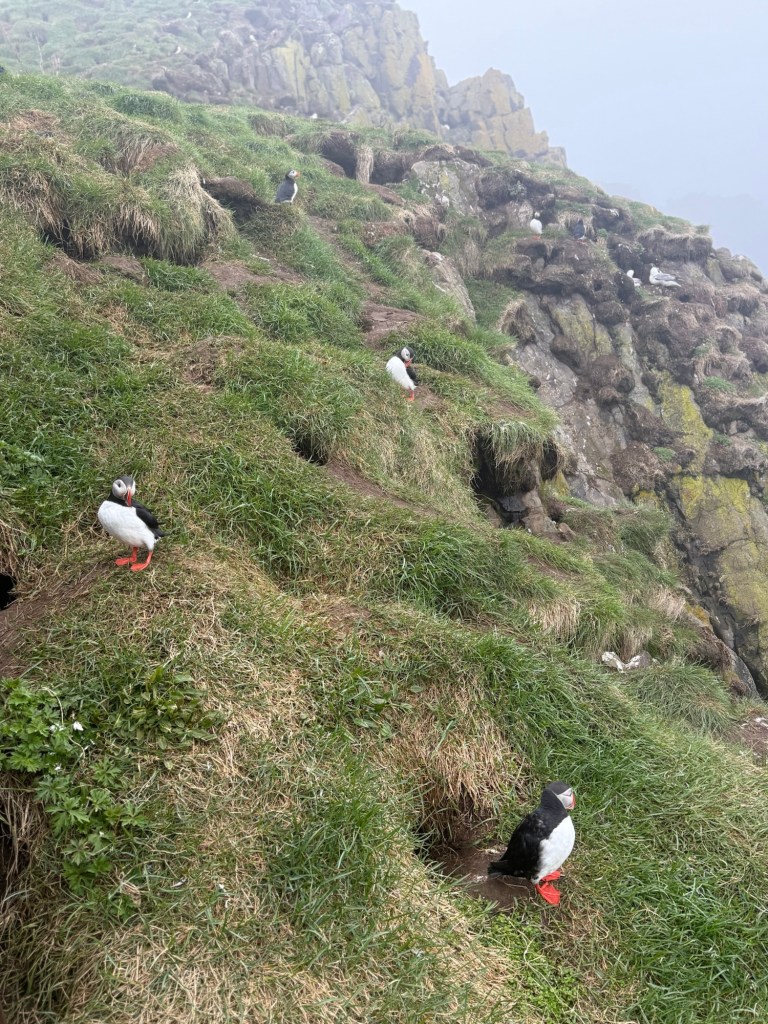
The journey took us over a treacherous mountain pass cloaked in thick fog, with snow stretching along both sides of the road. As we descended toward the coast, anticipation grew. We parked the car, climbed a series of stairs, and suddenly found ourselves surrounded by puffins everywhere.
Puffin in flight
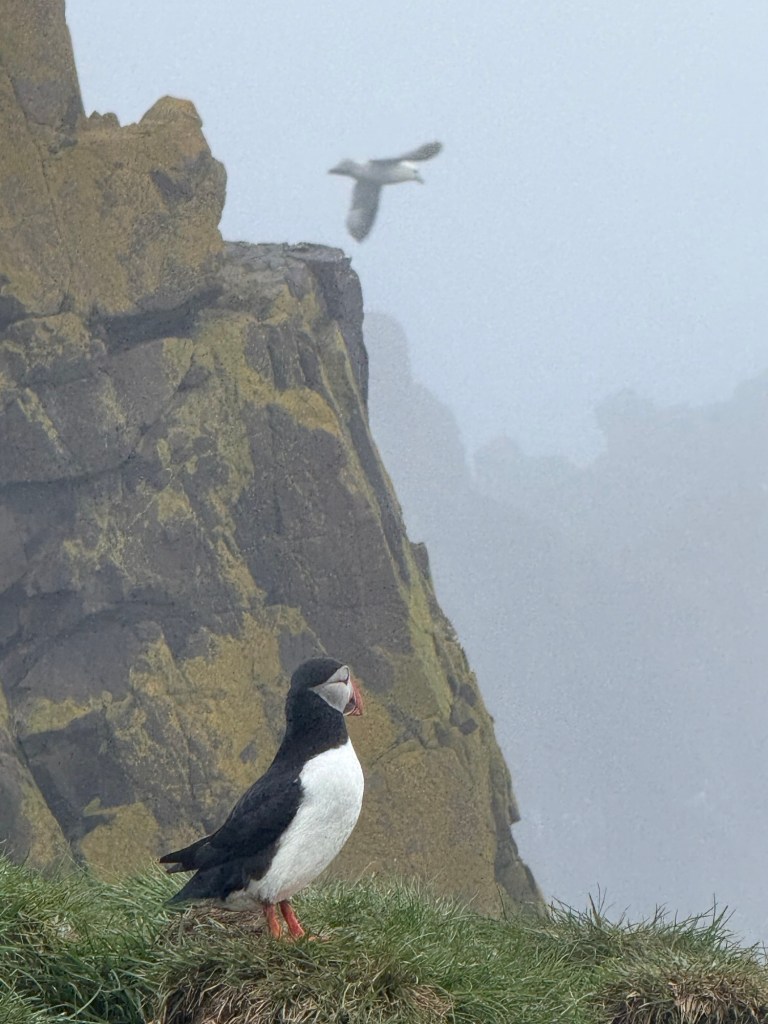
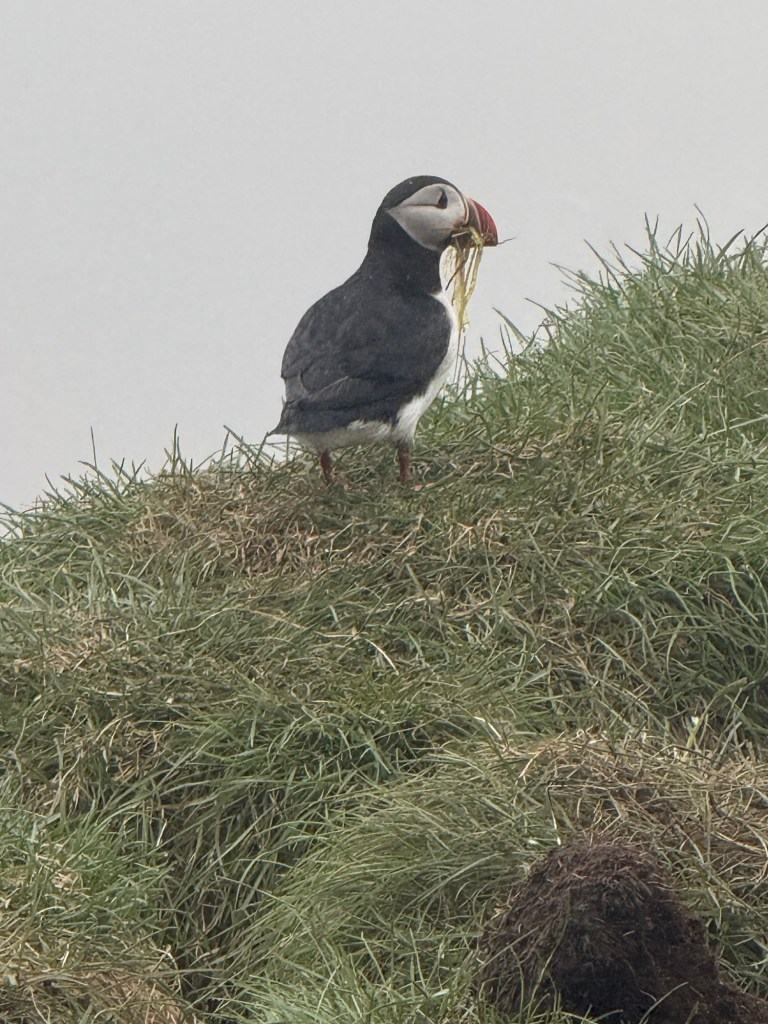
Their bright orange feet flashed against the green cliffs as they waddled about. Some took flight, circling over the sea before returning to the burrows they had carefully dug into the hillside. Others busied themselves building nests, while many stood quietly preening their feathers.
Industrious Puffin making nest
All of this unfolded against a spectacular backdrop of dramatic sea cliffs, crashing waves, and mist-shrouded mountains—a scene so beautiful it seemed almost unreal.
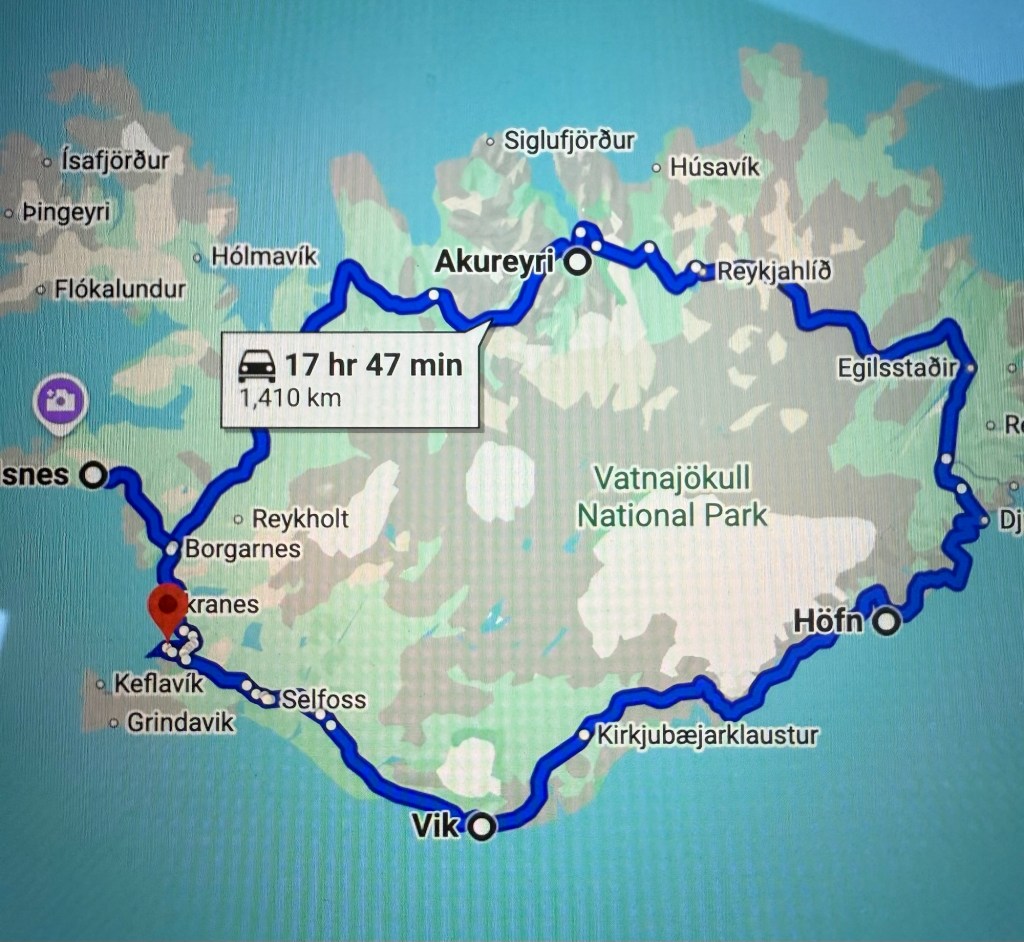
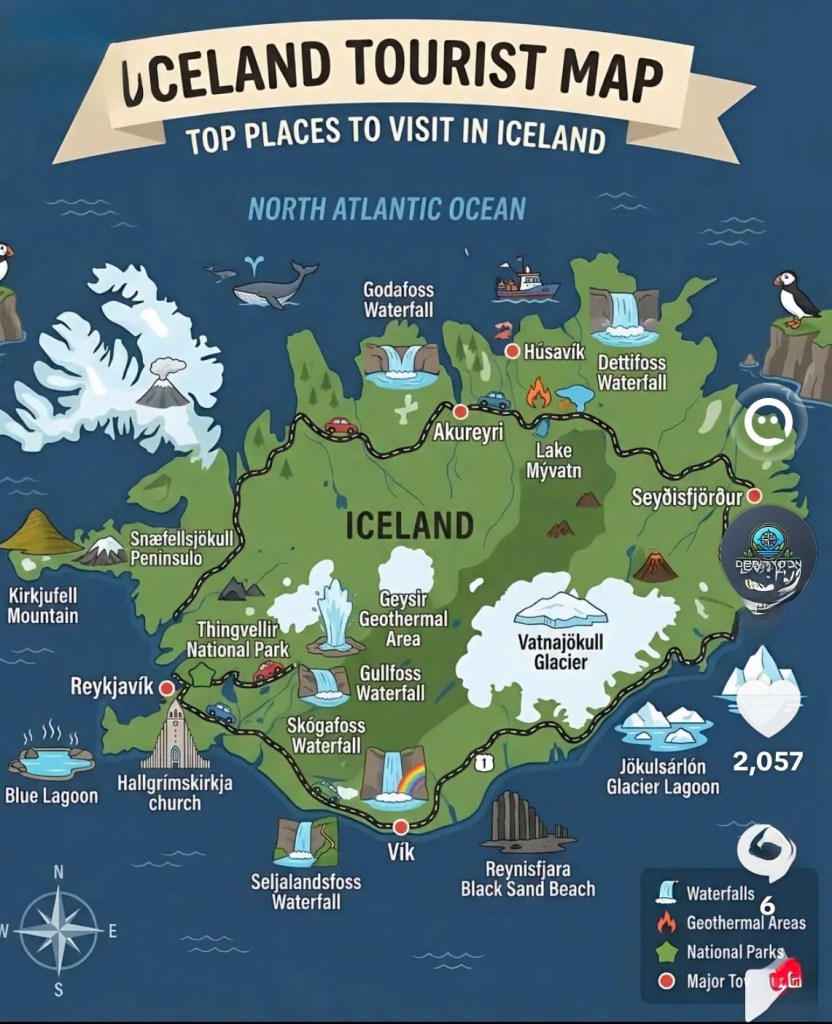
10 day road trip circumnavigating Iceland with my niece, my neighbor friend and her daughter.
We are not going to Iceland for the food, baked puffin? We are not going to Iceland for the weather, 50 degrees & rain. We are not big hikers. And it’s expensive. So what draws us to Iceland?
Iceland is known for its hot springs, volcanic landscape, glaciers, waterfalls. Perhaps it is the natural beauty that attracts us. But as the trip unveils, the answer will become apparent.
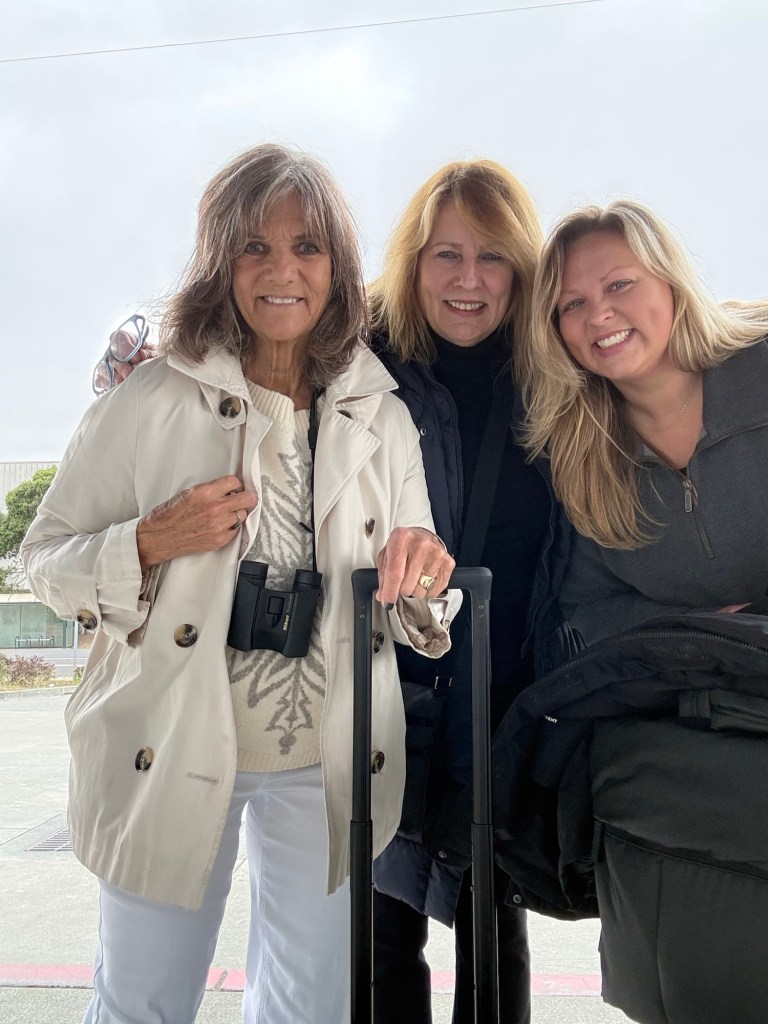
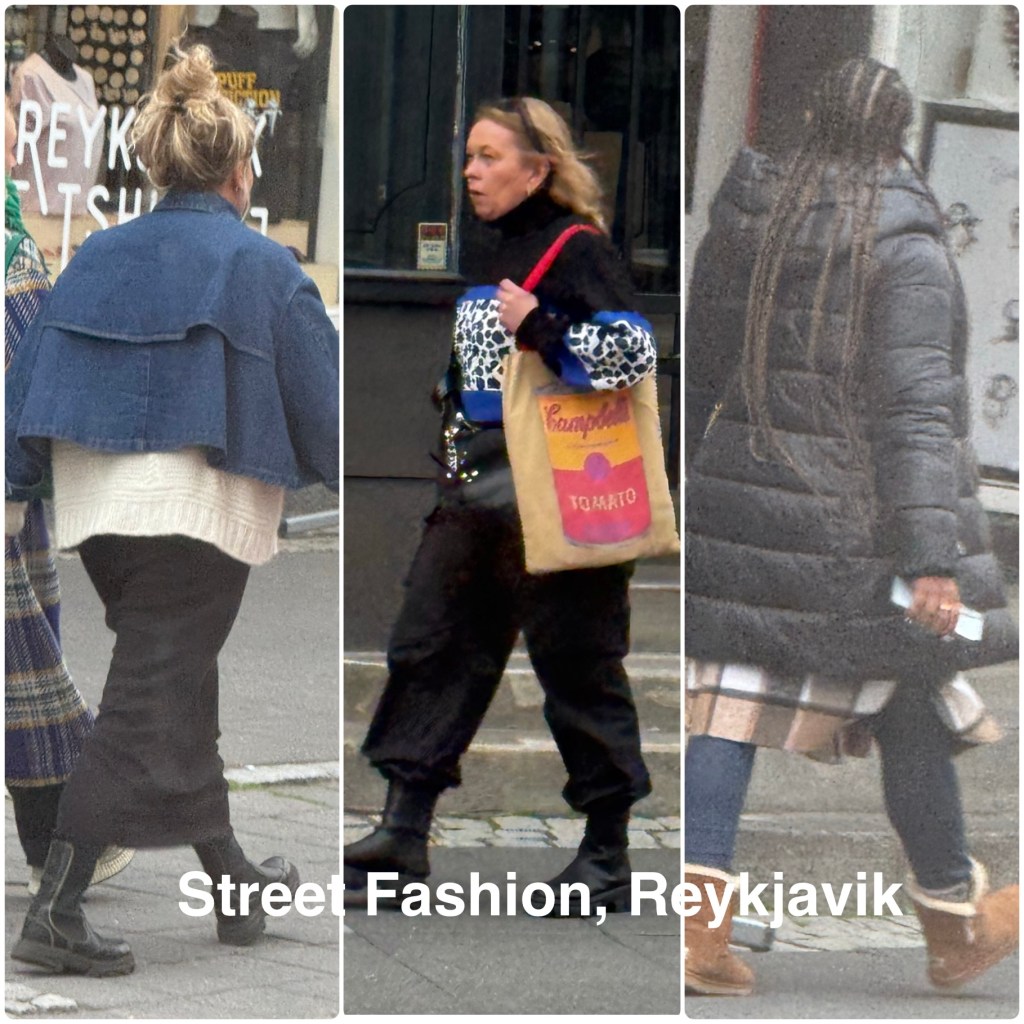
Note the binoculars! At Airporter with 3 intrepid travelers! Will meet niece in Reykjavik.Plenty of places to visit! Onward!Street Fashion, ReykjavíkStreet Fashion, Reykjavík
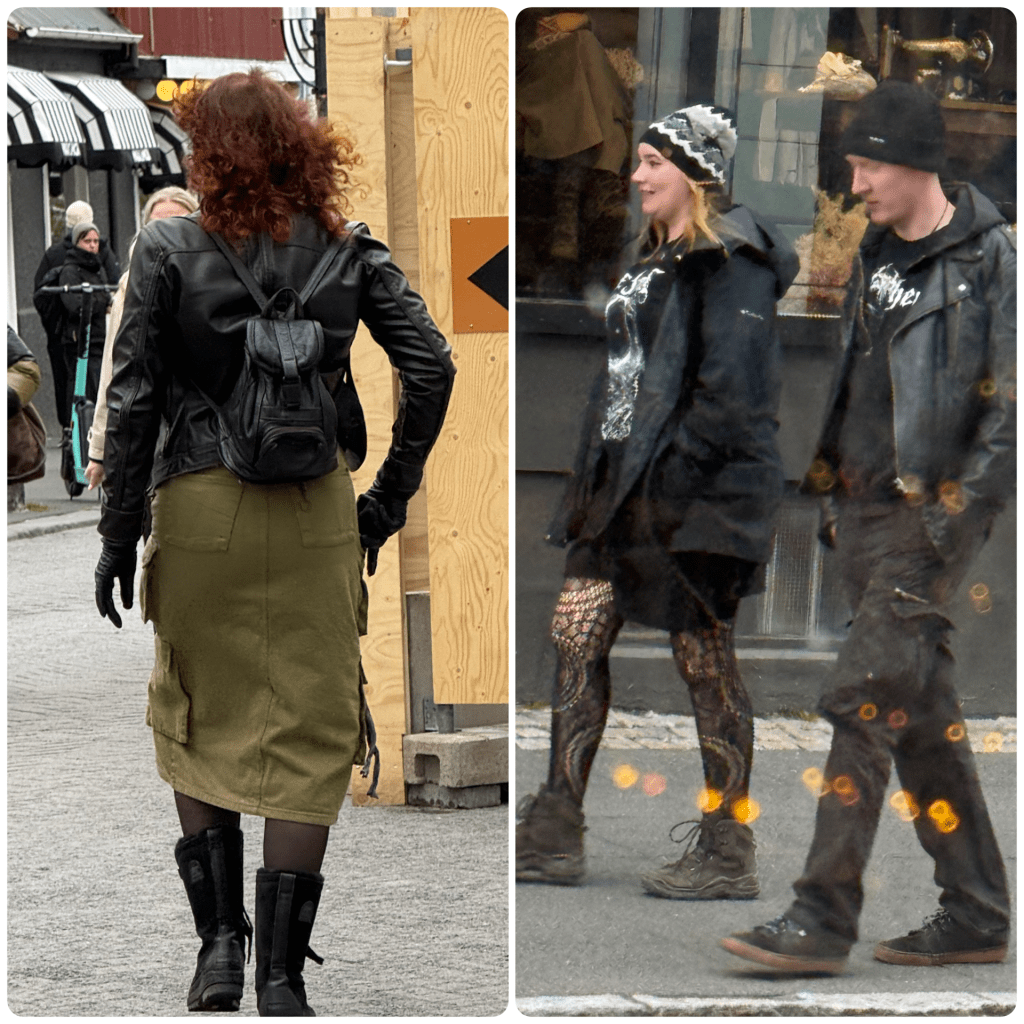
Under 50 degree temperatures, day or night, everybody wears genes, black pants, tennis shoes or boots complemented with a warm jacket. In the evening when the temperatures drop, gloves, hats, scarfs come out. And an umbrella is a smart accessory at any time! The pace is a constant stroll without stopping. Possibly due to the cold or few benches available. People watching is from the warmth of bars and restaurants. Iceland draws an international crowd of families, single women and groups or pairs of men. Incredibly ice cream cones are popular even in this cold climate.
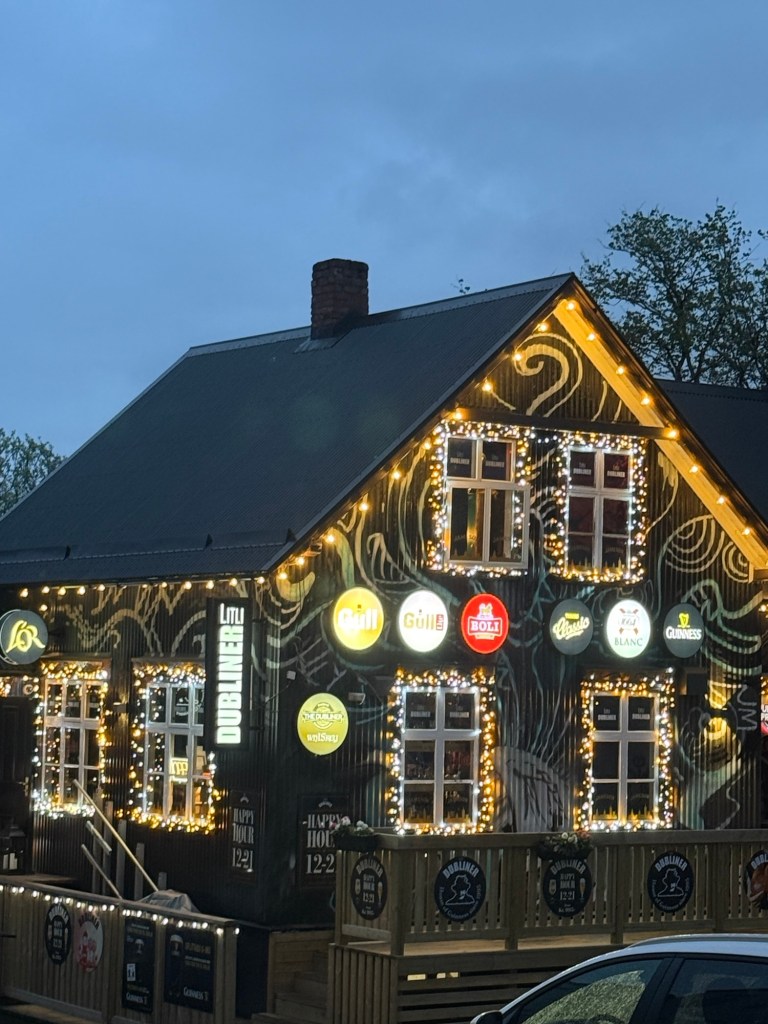
Took a walk at midnight and it’s still light out. Only this business had lightsShopping downtown Reykjavik
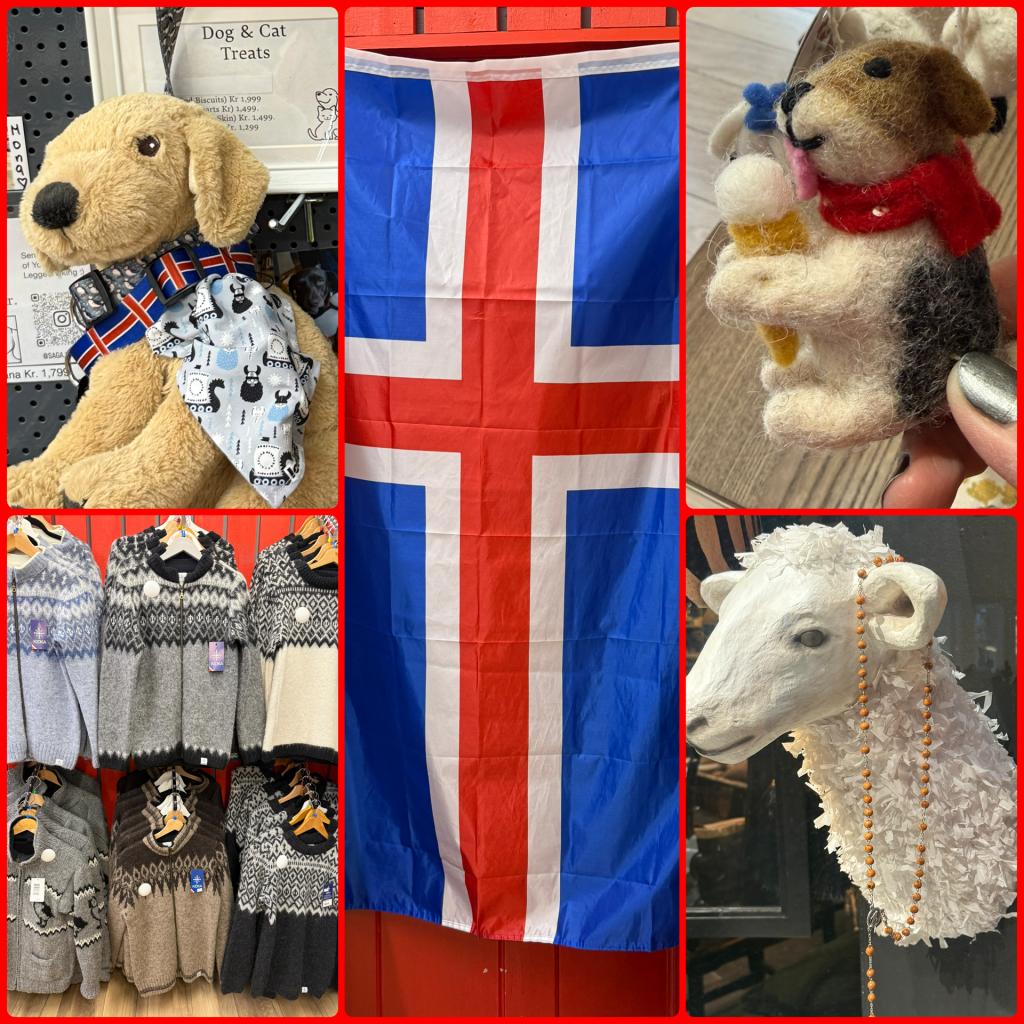
Shopping opportunities abound, but the prices are astonishingly high. An Icelandic knit sweater can easily cost $350, while a papier-mâché sheep wall hanging may run $550. Nothing in Iceland comes cheap. Still, the shops are filled with beautiful local treasures — Icelandic brands, handmade horsehair jewelry, ceramic mugs, books by local authors, and, of course, lovingly hand-knit scarves, hats, gloves, and other charming trinkets.
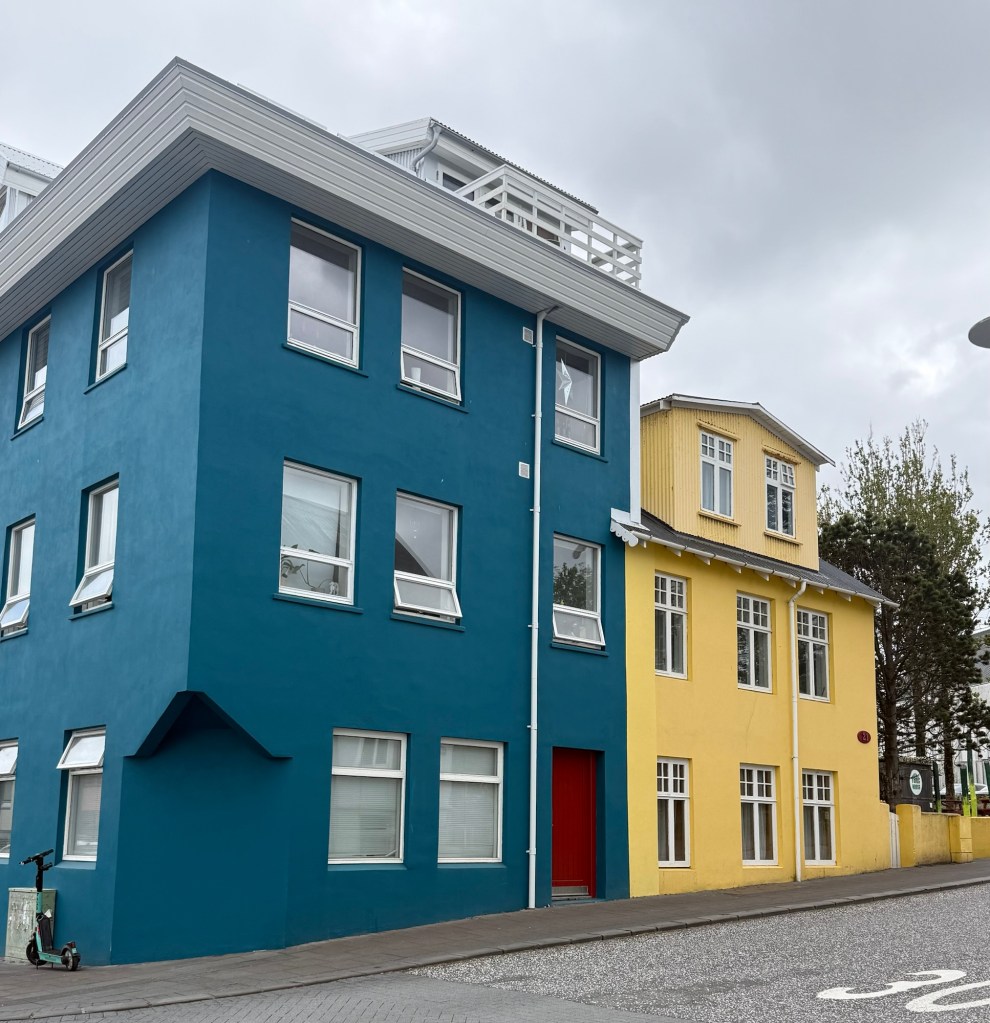
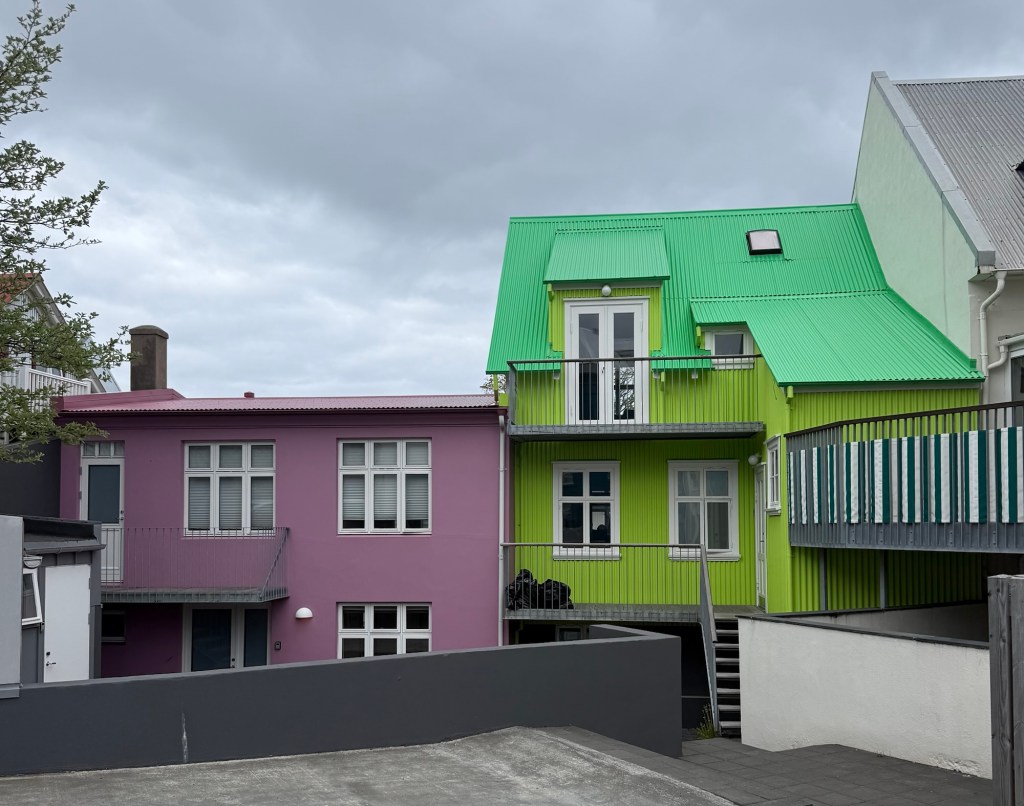
The houses themselves brighten the landscape, with roofs painted in cheerful shades of green, pink, blue, and yellow. Rows of colorful homes line the streets, their vivid doors and trim standing out against the gray skies and rugged volcanic backdrop. In a country often wrapped in mist, wind, and rain, the bright colors seem to bring warmth and personality
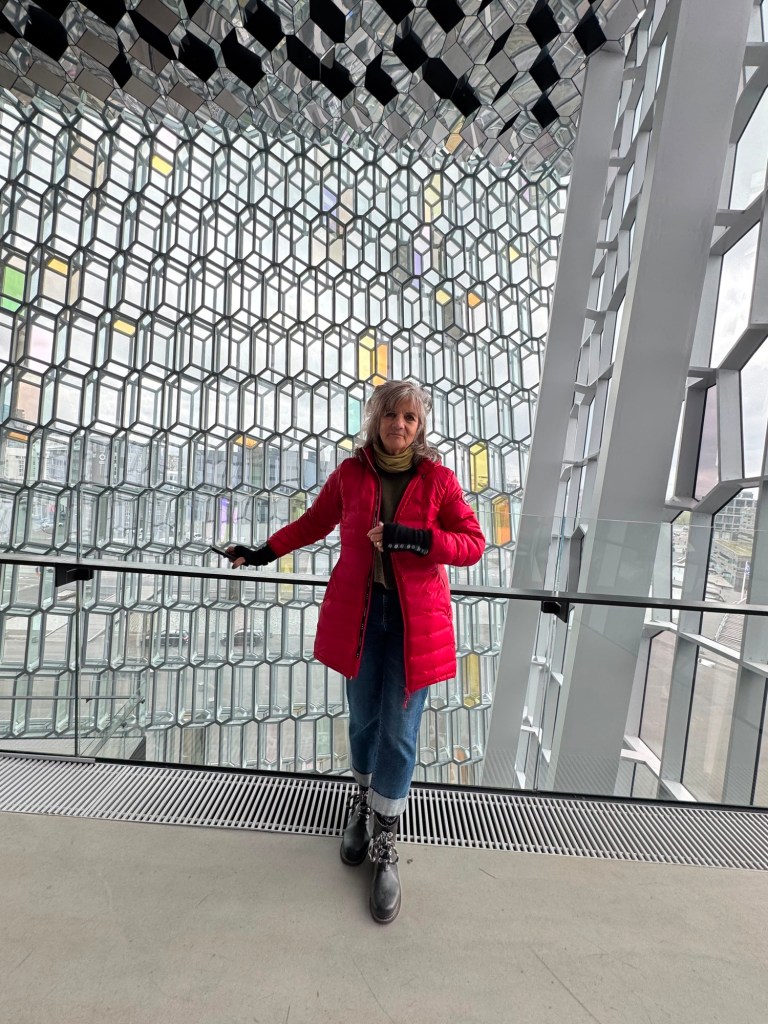
A must-see architectural marvel is the Harpa Concert Hall, perched near the wharf with its stunning glass facade reflecting the sea and sky. Free to enter, the building buzzes with activity, from its stylish gift shop to the lively café filled with locals and travelers alike. During our visit, high school graduations were underway, and families dressed in their finest carried armfuls of colorful flower bouquets to celebrate the graduates. Throughout the streets, students in costumes and festive attire raced about playing scavenger hunt games, filling the city with energy, and celebration.
Iceland is a land shaped by volcanoes. Geothermal water, (naturally heated by magma close to the earth’s surface), provides an abundant source of free energy. Through an intricate network of continuously circulating pipelines, this natural heat warms homes, schools, swimming pools, and even sidewalks during the cold winter months.
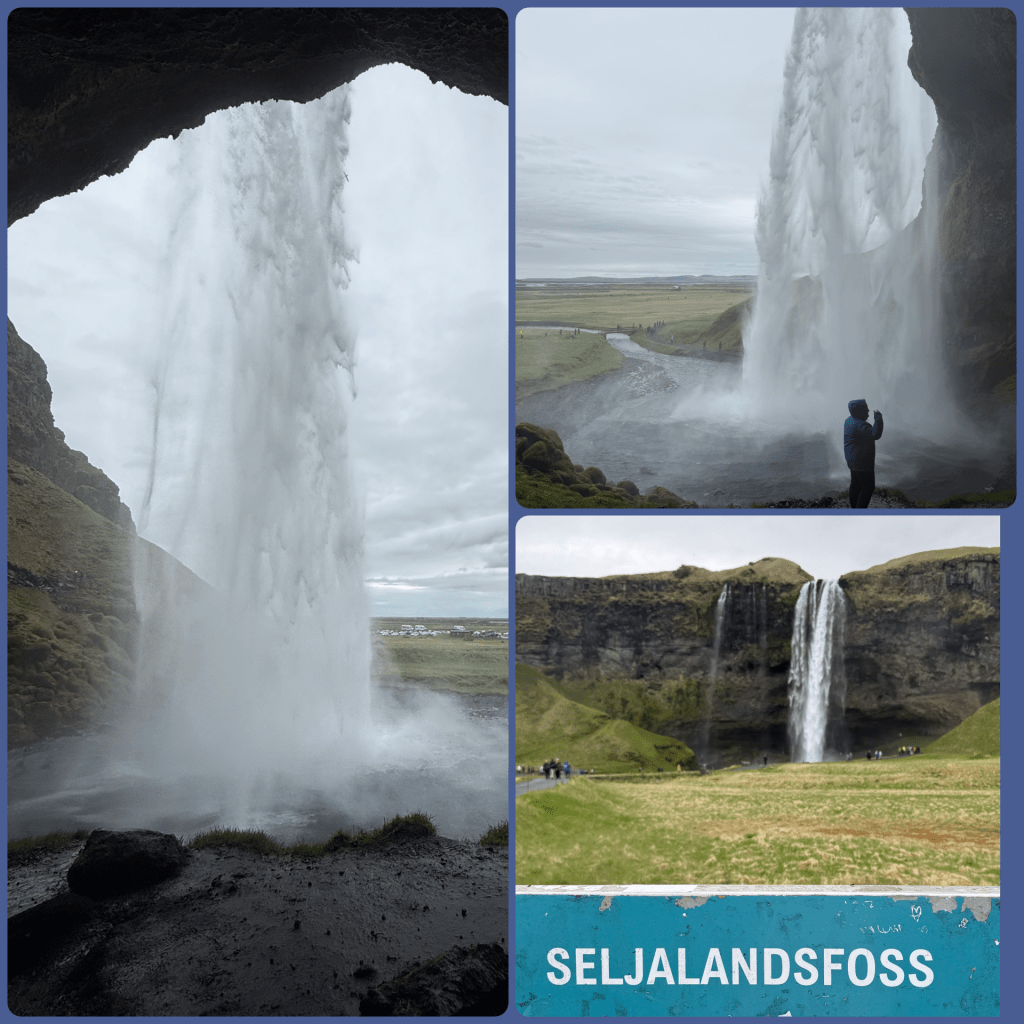
Weather cooperated as we walked behind waterfall its origin a volcanic glacier.
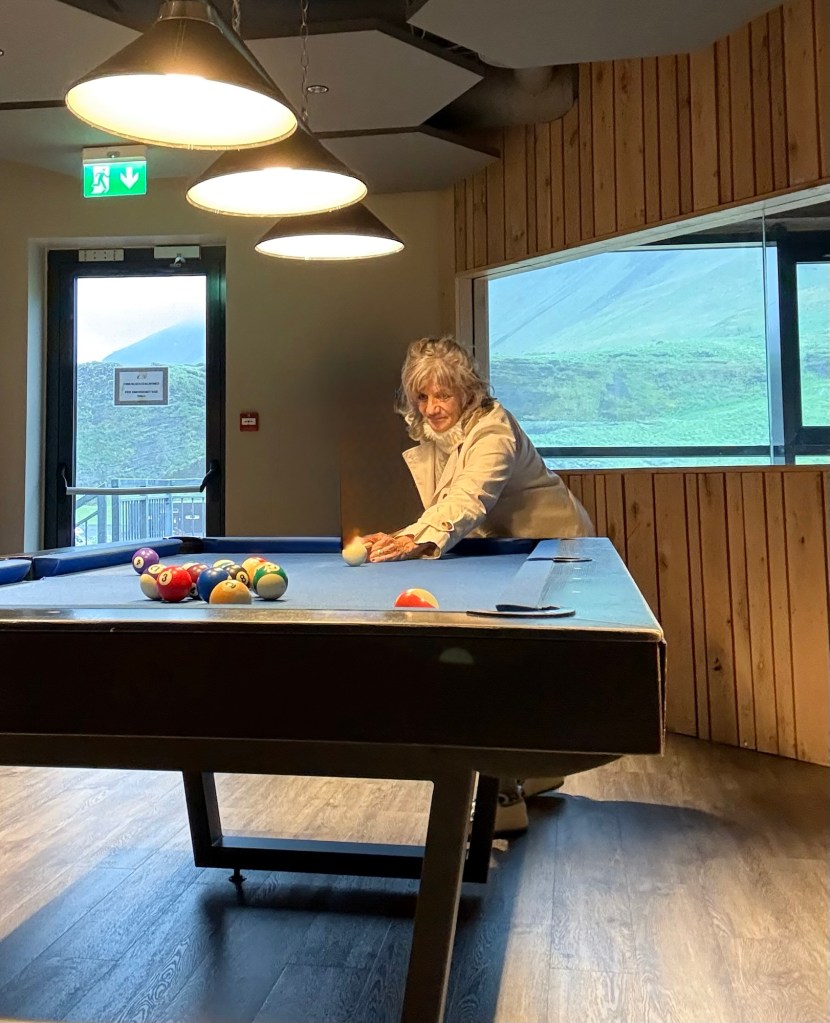
We arrived in the town of Vik under fierce gusts of wind and sleet-driven rain. Simply getting the luggage from the car became an adventure, requiring both hands just to hold the door open against the powerful wind. Thankfully, our hotel was warm and welcoming, with generous lobby spaces perfect for escaping the storm, along with a pool table, ping pong table, and even a dart room for indoor entertainment. Early night to sleep after my canned gin & tonic.
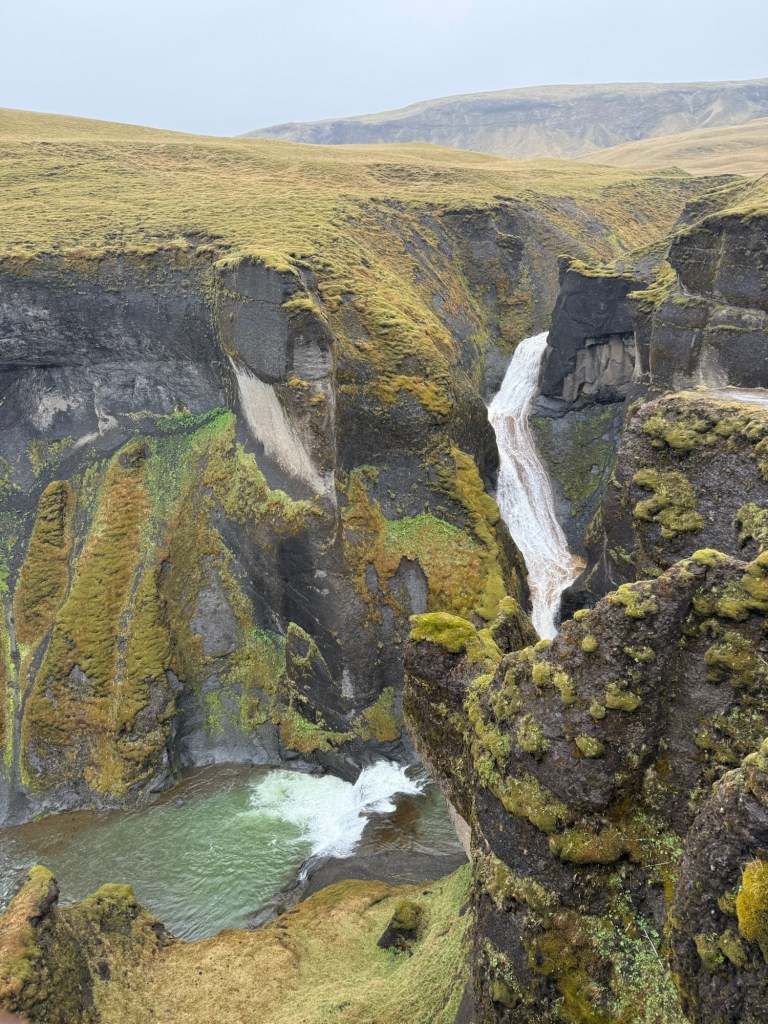
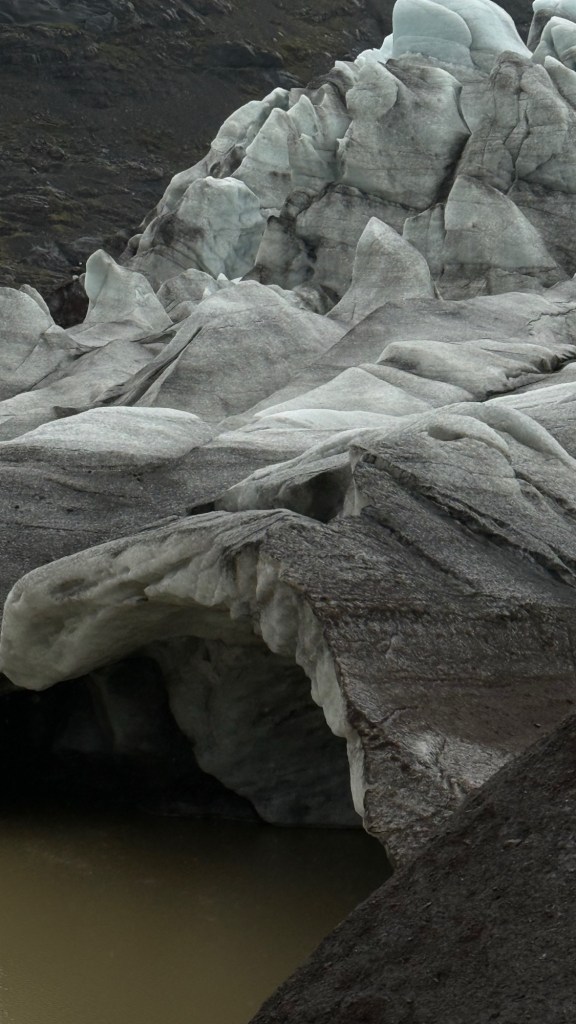
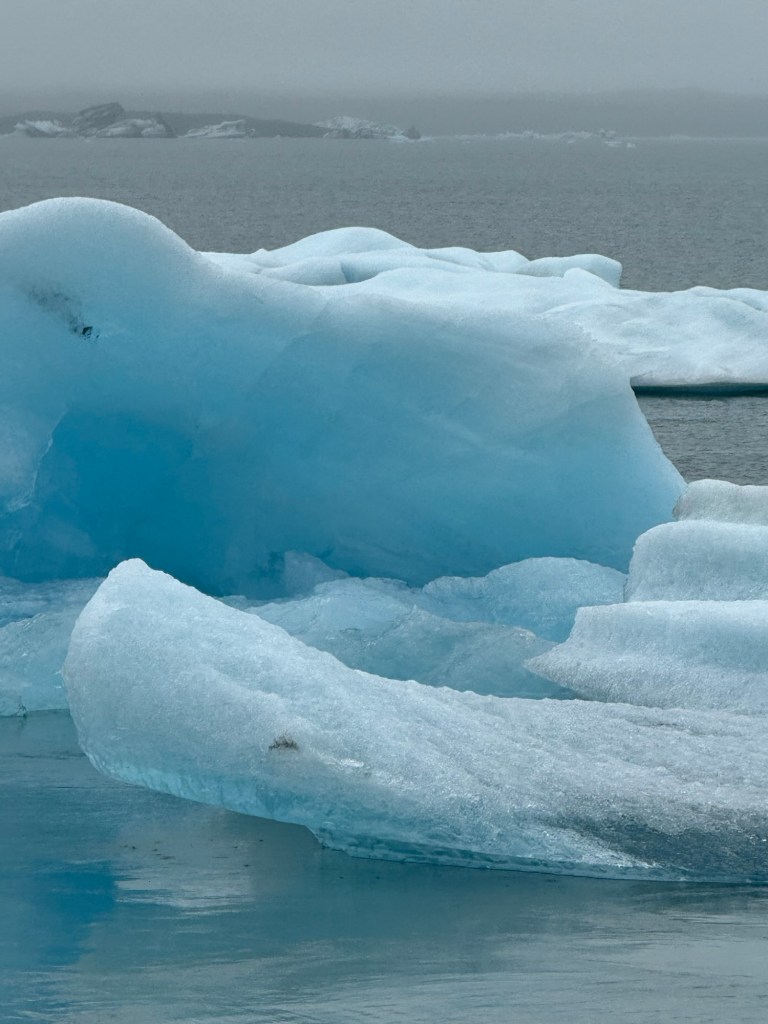
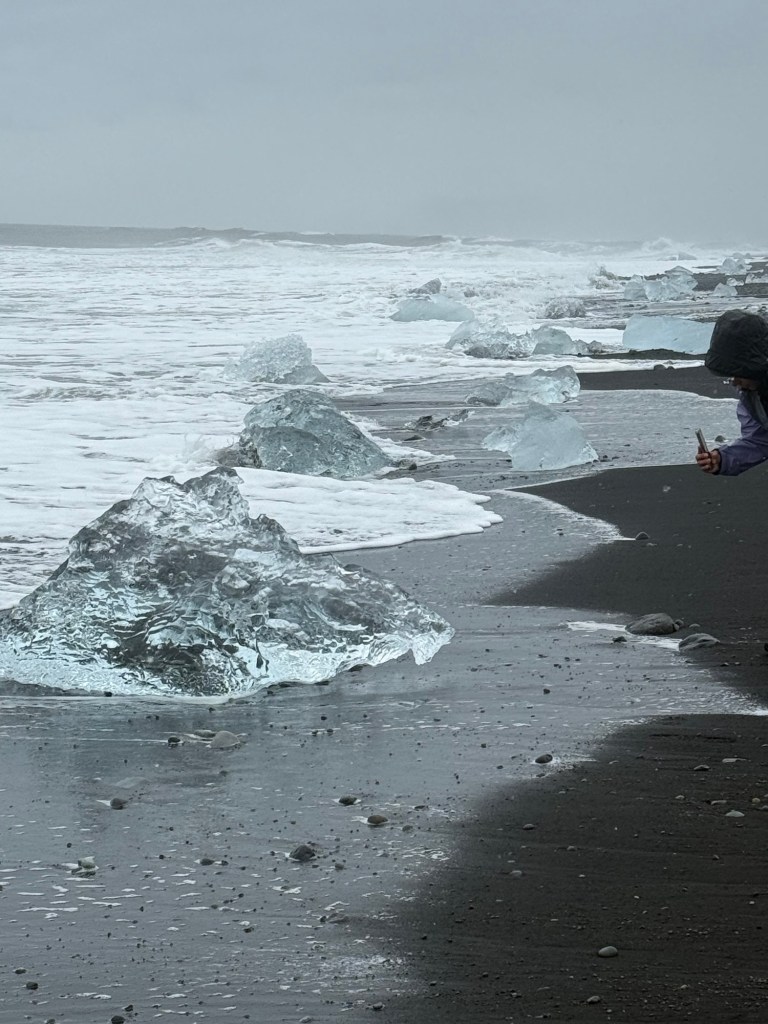
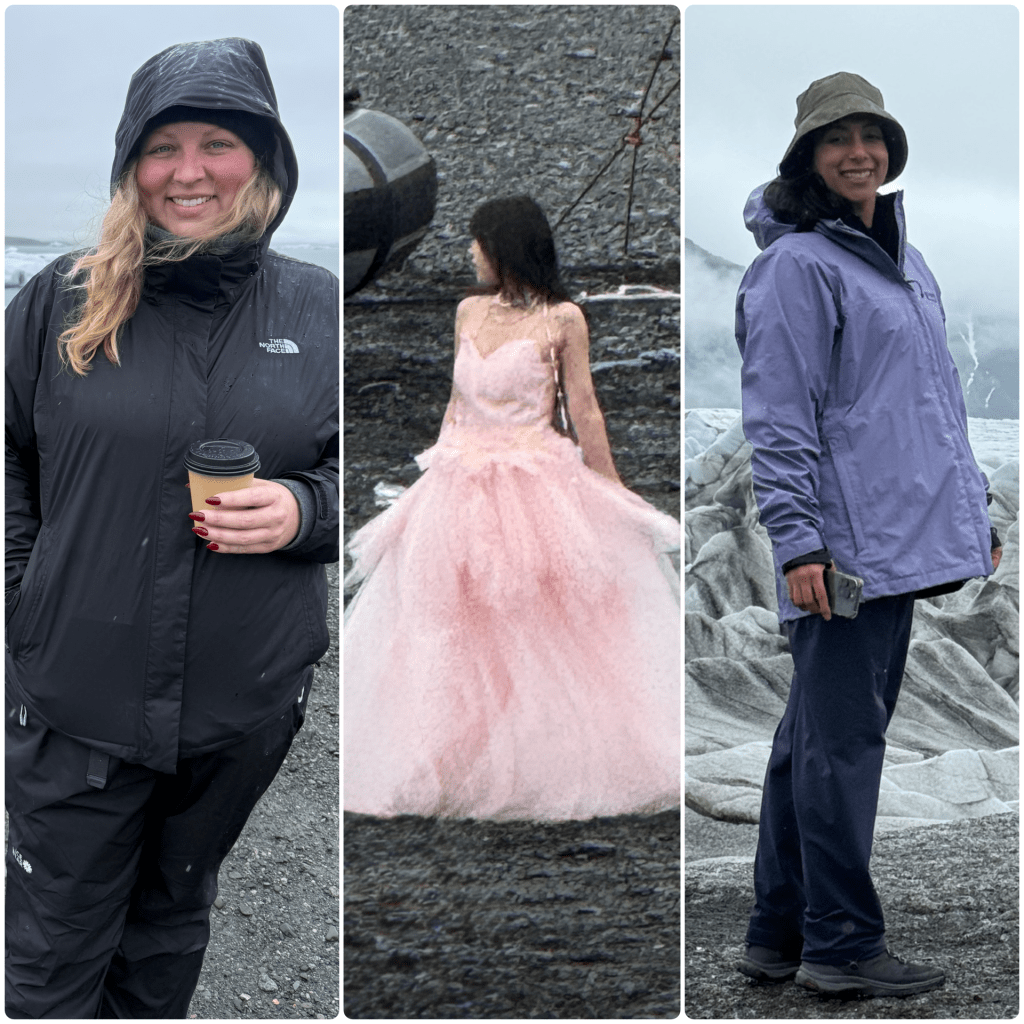
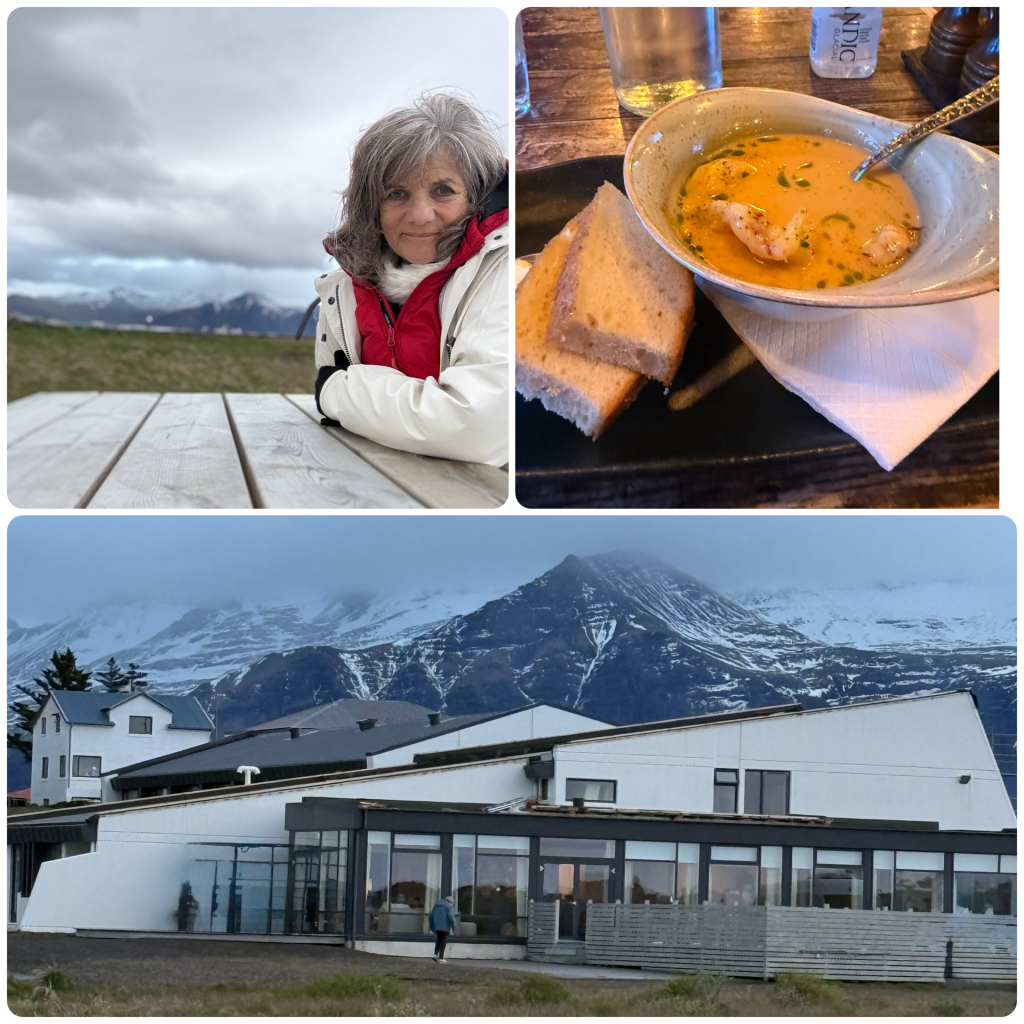
Playing pool in hotel lobby during storm outsideHiked uphill to see waterfall thru gorge. Southeast Iceland on way to HofnWalking on Glacier SE IcelandGlacier Lagoon, near HofnDiamond beach: icebergs break off from lagoon and wash up on beachHorses, reindeer, & sheep Oh My!Glacier fashion…..Lobster soup, Hofn hotel, walk along shoreline
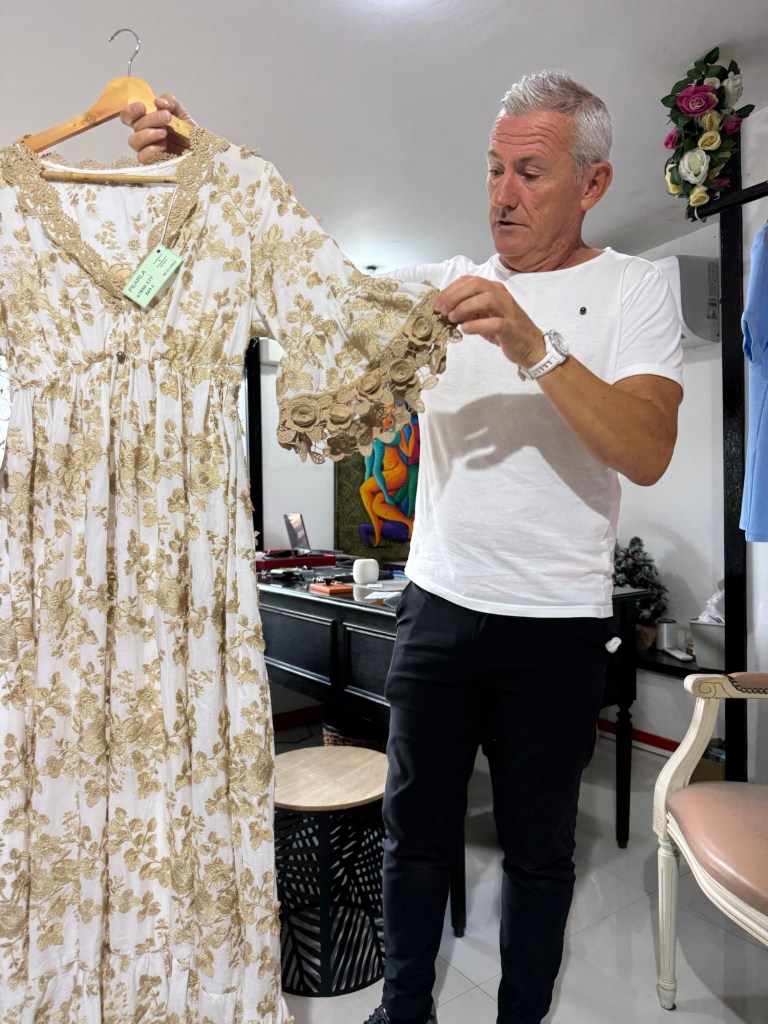
Hailed a taxi from the cruise ship dock to the Hilton in Moorea. From there the taxi driver took me to a public beach at Apunohu Bay. Wasn’t ready to snorkle so started walking down the road. Stopped at a store showing cool clothes from Italy and 2 e-bikes out front. Noticed a bike lane. Rented a bike for 2 hours at $22 from an Italian named Max. Could cover lots more ground with bike vs walking. So many local stores selling homemade gifts, smoothies, fruit plates. Had a blast! Dropped off bike and walked to the public beach to snorkel then walked to Hilton to hail a cab. Stood on road and a cab stopped to pick me up. Two cruisers in back seat recognized me! I was grateful for the ride and tipped $10 USD.
After a day at sea, we returned to the Society archipelago to visit Motu Mahaea and Bora Bora. Motu Mahaea was a small island where Windstar grilled American food and offered water sports. I finally stood on paddle board, fell in water 5 times but always got back up only to fall down again!Went in kayak but mostly snorkeled around the small motu.
Approaching the island of Bora Bora by sea is enchanting. I have approached islands of French Guyana, Caribbean, Hawaii but Bora Bora’s peaks are majestic.
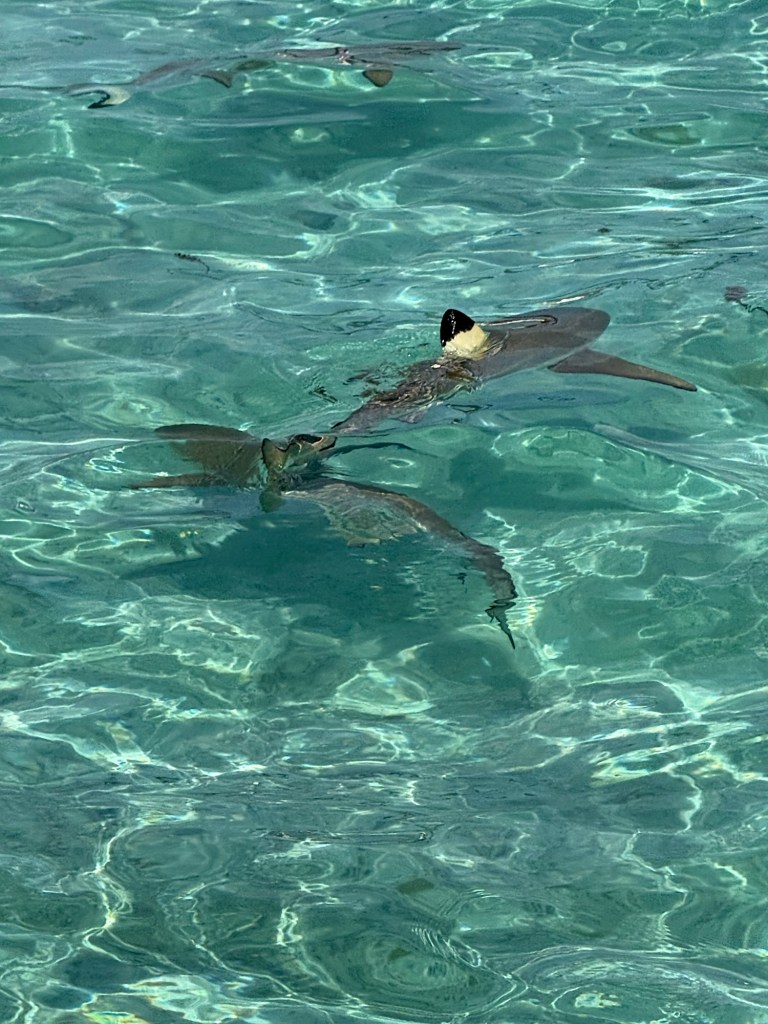
Bora Bora snorkeling with black tipped sharks
Snorkeling with black tipped sharks, sting rays and spotted a camouflage eel was the highlight of my trip. It is possible to travel by ferry, then taxi to hotel. But lodging is high end and expensive.
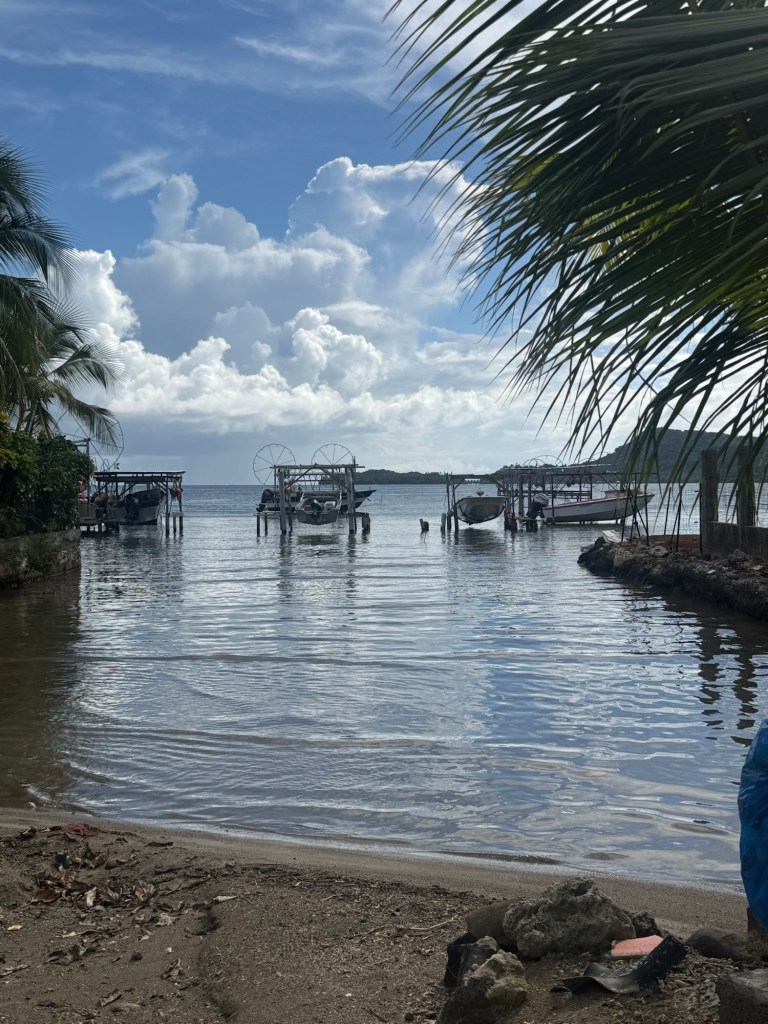
Walking around Vaitape, capital of Bora Bora is eye-opening. Unlike Hawaii, these islands are authentic. From the one lane paved road, there is an abundance of local fruit: bananas, mangoes, papayas and groves of pineapple too. Many of the houses have corrugated roofing, but they all have a boat landing if they’re on the waterside and many have cars or scooters, reflecting resources. The dogs, cats and chickens cross the road, always one dog is limping. From the one lane road, I passed a dentist, an eye doctor, & vet medicine, likely visiting services. You see everything on the road. A young man pulling a wheelie on his motorcycle, a two year-old fast asleep in mother’s lap on scooter, a tourist filming from back seat of scooter, a Mother and 2 kids riding a scooter. A bicyclist with baguette in the basket. Everyone wears helmets, likely French law. And dead crabs dot the road. If you want to find the market on Sunday look for the cars and you’ll find Chin Lee, a general store similar to Hasegawa in Hana, Maui.
Shopping in town of Bora Bora is fun! Maybe one block, mostly French run greeted in French but Polynesians selling too. Tahitian pearls in every setting imaginable and home made dresses and shirts available at high prices $150 for a shift without pockets. Tahitian pearls come with diamonds marking up prices but we found more reasonable pearls set in beads.
The French Polynesia five archipelago is roughly the same size as Europe. Located further south from Hawaii and half way to New Zealand. Think the same longitude of Lima, Peru but in the middle of the Pacific Ocean. The archipelago is comprised of volcanic islands, coral atolls and the vast Pacific Ocean.
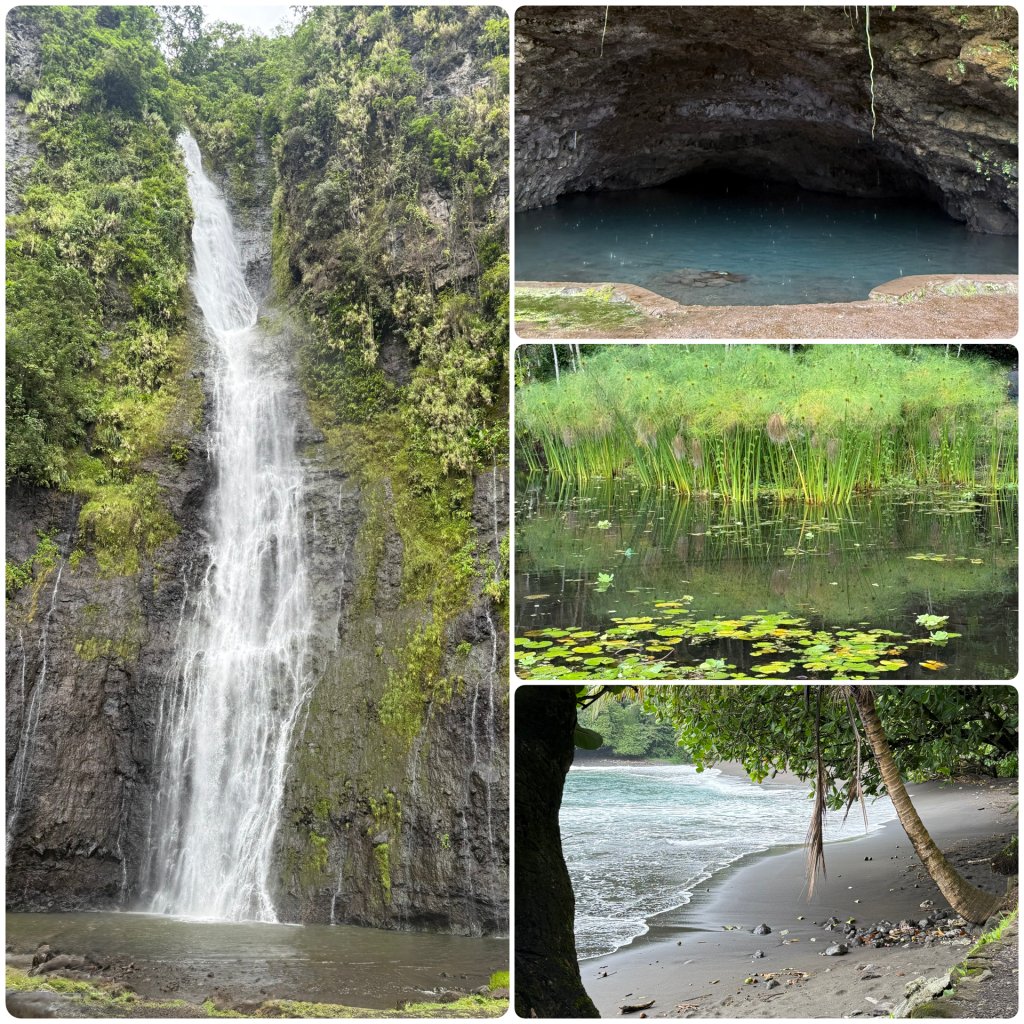
Waterfalls, beaches, gardens, grotto tour of island of Tahiti
Before the cruise, from the town of Papeete, we took a 4 hour tour of the island of Tahiti: visiting a grotto, a garden, a waterfall and several landmarks. Interestingly, Mutiny of the Bounty was written by the great grandfather, Charles Bernard Nordoff of our tour guide. At the hotel pool in Papeete during a deluge, met a couple from Cook island archipelago who explained no foreigner can buy land on their island Rarotonga. They own and manage a beach resort while raising 3 children and are privileged to travel to New Zealand, Australia and neighboring Pacific islands.
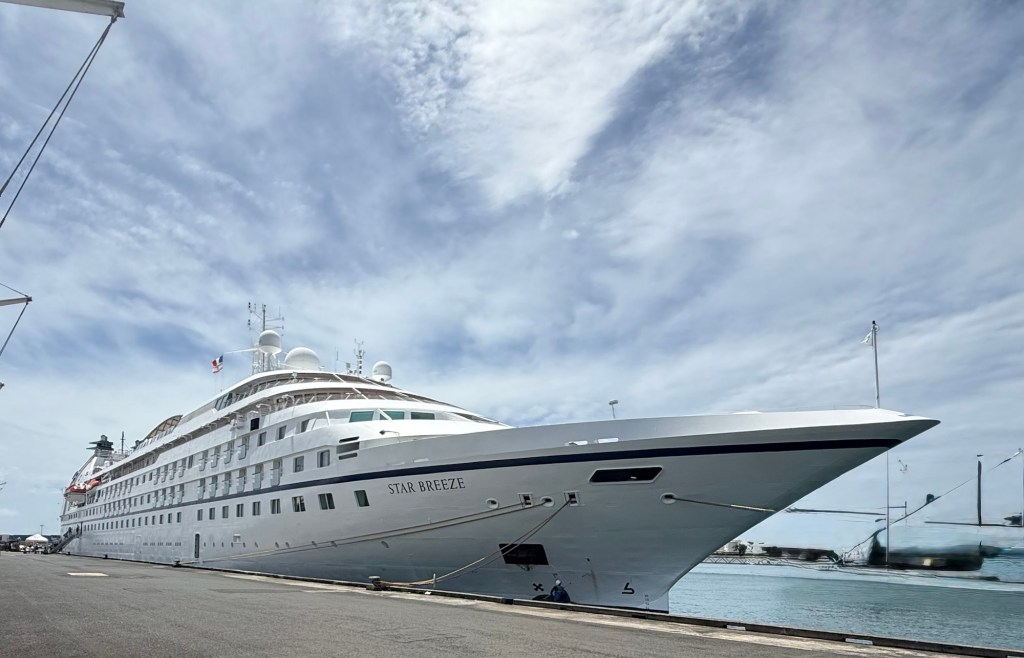
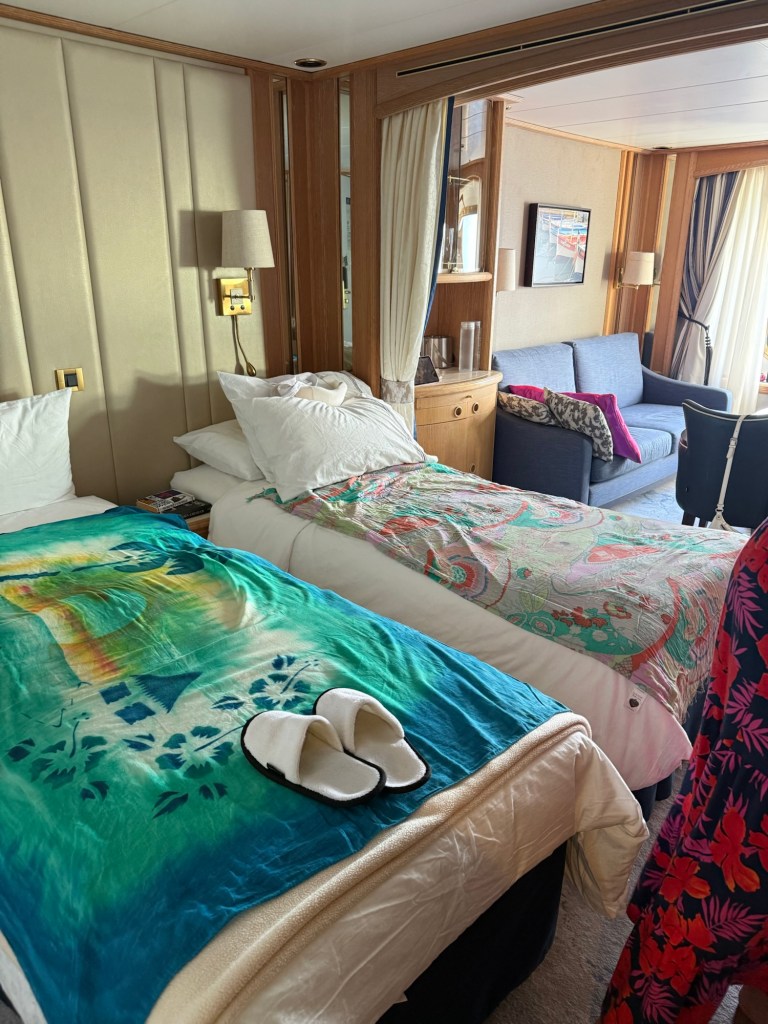
Embarking on the cruise from bustling Papette harbor was organized and efficient directed by WindStar. This 10 day cruise blends 2 days at sea and visiting 5 islands over 10 days. We cover 2/5 archipelagos: Tuamoto and Societe. Our cabin is spacious with a large window port side watching the horizon and endless waves. A basket of fruit, ample bottles of water and a stocked refrigerator is the norm. Outside the cabin there are a number of places to eat, to drink, to exercise or simply to watch the sea. All the amenities coalesce into an elegant but not a stuffy sailing vessel.
Land Ho!
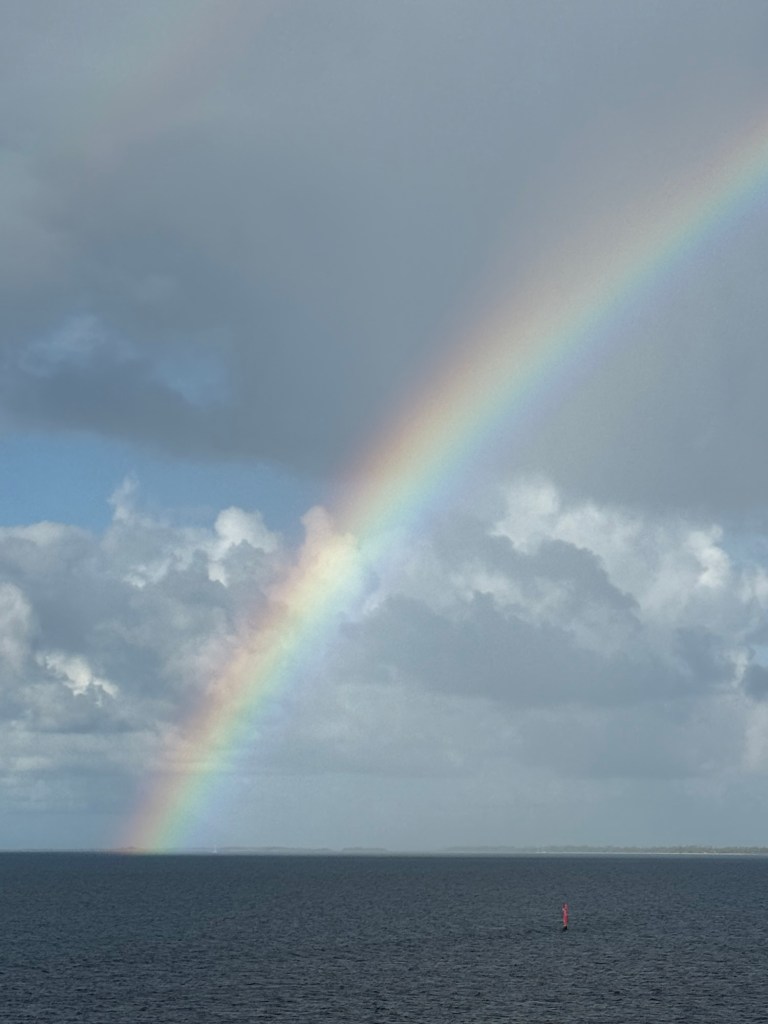
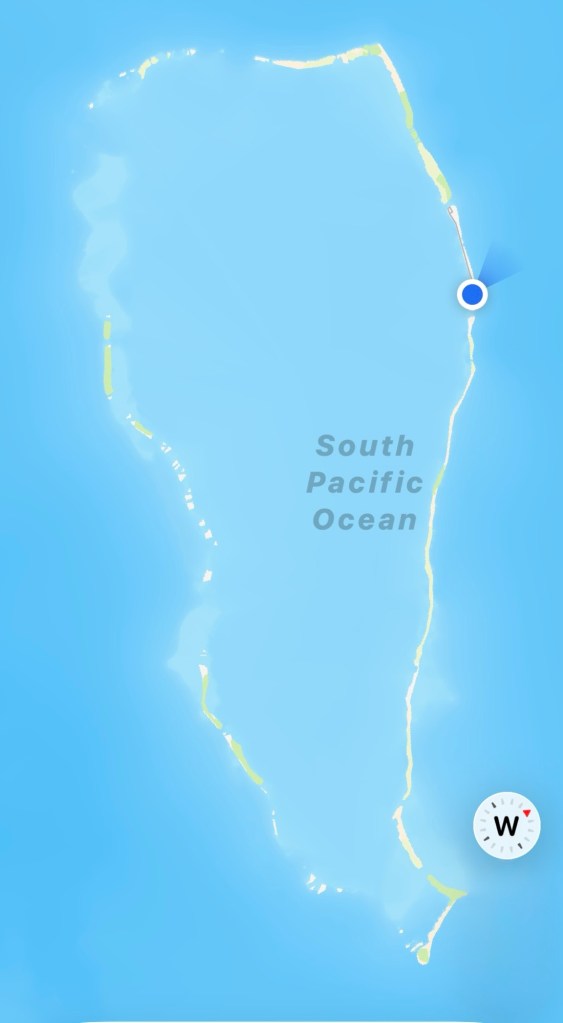
After a day of at sea we arrived on the atoll from the Tuamoto archipelago, called Fakarava. We were greeted by an early morning rainbow from a passing squall. Fakarava is known for diving with sharks. The only paved road of this atoll is bustling with a tractor picking up trash, locals riding beat up bikes, or scooters and trucks driving to and fro.
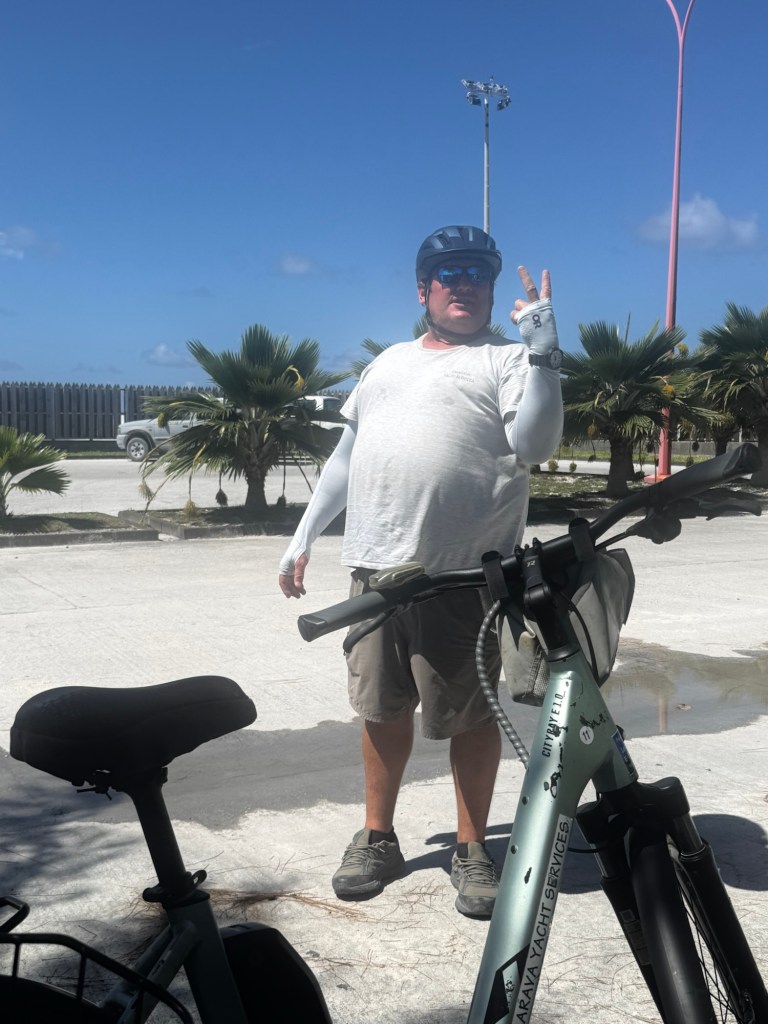
Excursion e-bike with French man who lives on atoll with Polynesian daughter
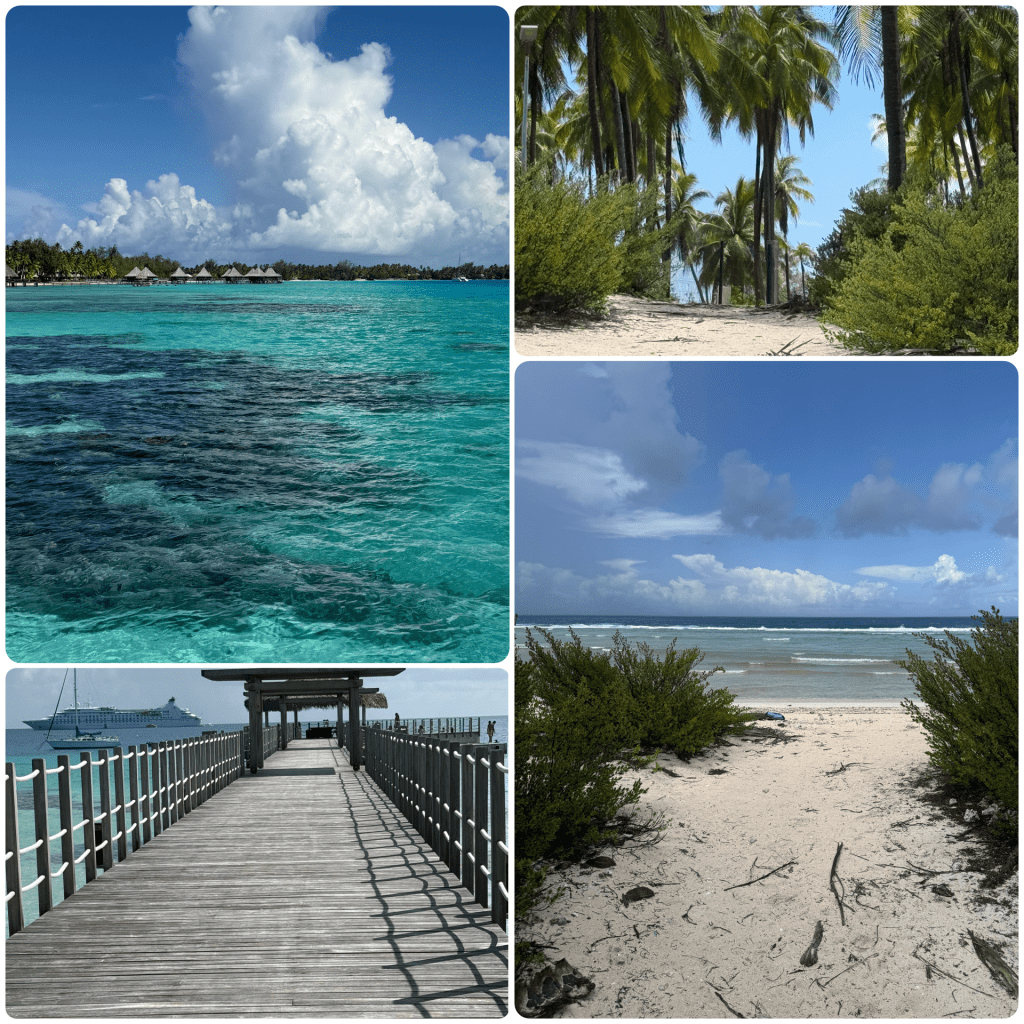
Otherwise dirt roads abound to the ocean and lagoon. The coastline of the lagoon is aqua blue with coral reefs and a small number of anchor outs dot the horizon. On Fakarava foreigners can purchase land but it’s risky because a local can claim the land even after signed paperwork.
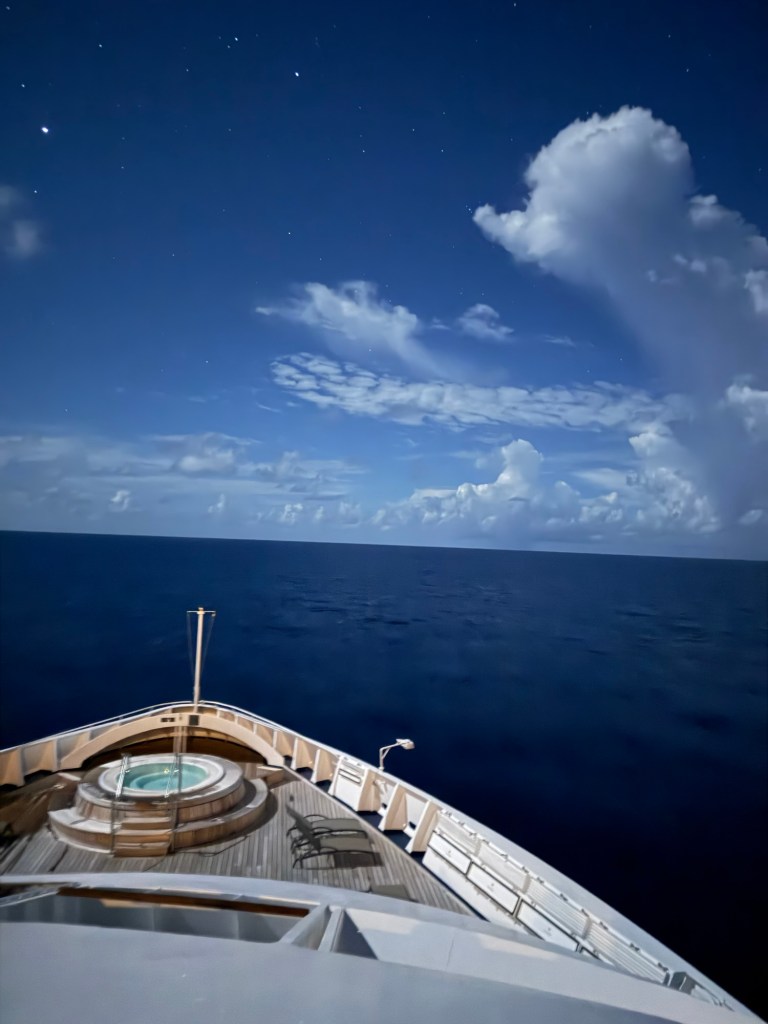
Star gazing Southern CrossAtoll Rangiroa lagoon side and ocean side. Excursion snorkling
From Fakarava we motored 7 knots overnight to the largest atoll, Rangiroa in the Tuamotu archipelago. Snorkeling in the lagoon of Rangiroa met expectations. The coral is not colorful, but fish are in abundance and the clarity of the lagoon allows you to see white sand & black tipped reef sharks below. After snorkeling, took a walk on the ocean side and was stopped dead in my tracks when I spotted 3 animals running toward me in the shallow surf. Ended up to be 3 feral dogs who ran past me and later ended up in the lagoon side with 2 French tourists. The coastline is a combination of white sand and broken up coral. Under the palm tree, locals hang out, children play in the sand, and reggae music in the air.